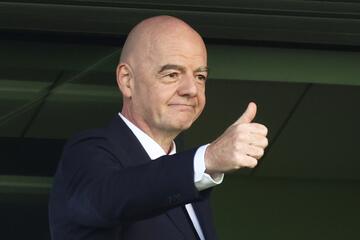
Teddy Riner explains why he is entering France’s presidential race

Teddy Riner, France’s celebrated heavyweight judo champion, says he will seek the presidency in 2027. His announcement adds a famous newcomer to a crowded and polarized political landscape, but leaves basic questions unanswered: what policies would he pursue, how would he build a campaign, and can he secure the support required to appear on the ballot? For now, the clearest part of his pitch is that France needs a candidate who can bring people together.
Riner announced his intention to run on Monday and discussed it in an interview with Le Parisien. His announcement and interview described a candidate outside the traditional left-right divide who wants to unite the country. Asked whether the bid should be taken seriously, he argued that staying silent while the country struggles would be the irresponsible choice. He spoke of a country where young and older people alike have difficulty picturing a future, and said he wanted to restore ambition and hope.
The public profile behind the announcement is substantial. Riner is 37 and a nine-time world champion, with Olympic gold medals in 2012, 2016 and 2024. He has also worked as a television presenter, including on the French version of Love Is Blind, and has business interests in production, property, sports clothing and branding. He is regularly counted among France’s most popular public figures. Those credentials offer recognition and a public platform; they do not, by themselves, establish governing experience or spell out a programme.
That distinction matters because Riner has not yet supplied much detail about what a Riner presidency would do. He has expressed liberal economic views, according to one report, and described a desire for France to work effectively with allies and earn greater respect internationally. Asked about a first handshake with President Donald Trump, he joked about who would have the firmer grip. It was a light answer, not an account of how he would handle a specific foreign-policy dispute. The reports provide no developed list of domestic priorities, proposals or prospective team members.
His announcement arrives amid weeks of demonstrations and social strain. Reports describe student protests over staff shortages and deteriorating schools, alongside broader marches demanding higher wages. Rising living costs and concern about artificial intelligence’s effects on work and labour rights have also fed public unease. Riner has said he hears anger and sees a lack of hope. He has criticized the rise of the far right, and French authorities investigated online racial abuse directed at him after those comments. The reports do not establish that the protests are organized around his candidacy or that his entry will change their course.
The political contest he hopes to join is already sharply divided. Marine Le Pen, the nationalist candidate, is described as the polling front-runner, with hard-left leader Jean-Luc Mélenchon behind her. A poll published alongside Riner’s announcement put Le Pen at 34 to 36 per cent and Mélenchon at 18 to 19 per cent; centrist Édouard Philippe was at 11 to 14 per cent, while centre-left Raphaël Glucksmann registered 11 to 13 per cent. These polling figures were reported alongside Riner’s announcement. These figures are a snapshot from one survey, not a prediction of the result. They also say nothing about how voters would respond to Riner, whose candidacy was newly announced.
There is a timing inconsistency in the reports worth keeping visible. They agree that the election is scheduled for 2027, but one gives voting dates of April 18 and May 2, while also describing the poll as occurring just over five months before the election. That interval does not line up with a report dated November 9, 2026. The materials do not explain the discrepancy, so the dates should not be treated as settled by these accounts alone.
Nor is a declaration the same as ballot access. To stand, Riner must collect 500 endorsements from elected officials, a formal requirement in France. He has also said that he still hopes to pursue a fourth individual Olympic gold at the 2028 Los Angeles Games. Asked whether running for president means abandoning that goal, he said he could continue if presidential duties allowed and the French people gave their approval. That leaves a striking practical question: how he imagines combining an intense national campaign, the responsibilities of office if elected, and elite competition.
France has had a prominent judoka enter politics before: David Douillet, a retired Olympic champion, became a politician. That precedent shows the path is not wholly unfamiliar, but it does not tell us how Riner’s campaign will fare. The immediate tests are more concrete: whether he gathers the required endorsements, clarifies what his political label means in practice, and persuades voters that his unifying message can translate into workable decisions. For my part, the ambition is easy to understand; the programme is still the missing piece. A candidacy can begin with a call for hope, but voters will eventually want to know what changes that hope would mean. That demand for accountability has surfaced in other political coverage, including questions about lawmakers’ accountability.
For now, Riner is offering a diagnosis of division and a promise to bridge it, rather than a detailed plan. Supporters may see a popular figure speaking to a real demand for renewal. Skeptics may ask whether a sports career and a broad appeal to unity are enough preparation for the country’s hardest choices. Both questions will become more answerable if he turns the announcement into a campaign with policies, organization and the endorsements needed to get on the ballot. The uncertainty over the country’s political direction also echoes the murky future after a clear election verdict.
Reported by The Philadelphia Inquirer, Deadline, ABC News, Variety.