Russian Drone Hits Rescue Crews at Bombed Ukraine Shelter
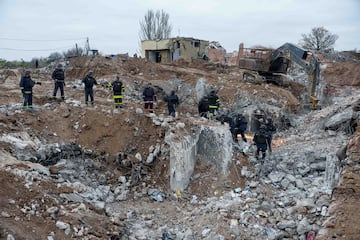
A Russian drone hit emergency workers on November 8 at a former school and nearby shelter in Komyshuvakha, in Ukraine’s Zaporizhzhia region. Russian guided bombs had struck the site earlier, while residents were waiting for humanitarian aid. Ukraine’s State Emergency Service said no one was hurt in the latest strike, but specialized rescue equipment was damaged.
At least 55 people were killed in the earlier attack, Ukrainian authorities said. About 50 people remained missing, and some recovered bodies had yet to be identified as DNA testing continued. Ukraine’s military intelligence agency said it had identified some Russian service members it believed were involved in the earlier strikes, which destroyed the school and an underground shelter.
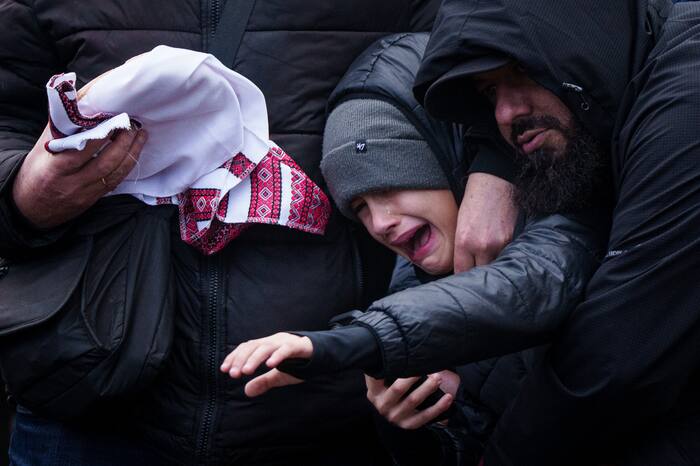
On November 7, relatives and police gathered in Zaporizhzhia to mourn six officers killed in the strikes, as well as three residents. The officers had been involved in rescue efforts. Natalia Karapetian, who was killed, had been handing out bread at the shelter, her husband said. Authorities plan a memorial for the residents in the cemetery where they were buried.
Ukrainian President Volodymyr Zelensky called the latest attack on rescue crews brutal and urged European Union countries to impose another package of sanctions, including measures against entities involved in producing Russian missiles. He said Russian attacks in the previous week included 115 missiles, 1,900 guided bombs and more than 3,000 drones. He also said strikes on energy infrastructure had left more than 600,000 people without electricity in Dnipropetrovsk region.
Separately, the Russian-controlled Zaporizhzhia nuclear plant lost its external power supply on November 8 after a damaged line was disconnected. Plant management said backup diesel generators were supplying power. The plant needs electricity to run essential cooling systems, and interruptions to its outside supply have raised concerns about the risk of an accident during a prolonged outage.
Russian Strike Hits Rescuers at Ukraine Shelter After Deadly Bombing
Russia’s latest strike in Komyshuvakha hit emergency workers at a site already devastated by guided bombs, where residents had gathered for humanitarian aid. The November 8 drone attack injured no one, but damaged specialized rescue equipment. The sequence underscores the danger facing crews trying to save people after attacks on civilian sites.
Ukraine says at least 55 people died in the earlier bombing and about 50 remain missing. Some recovered bodies have not been identified, with DNA work ongoing. The military intelligence agency said it had identified some Russian service members involved in the attack, which destroyed a former school and an underground shelter.
The human toll was visible at a November 7 memorial in Zaporizhzhia for six police officers killed in the strikes and three local residents. Natalia Karapetian was distributing bread at the shelter when the bombs hit, her husband said. Authorities intend to establish a memorial near the residents’ graves.
President Volodymyr Zelensky urged the European Union to adopt another sanctions package and target entities involved in producing Russian missiles. He said Russia had launched 115 missiles, 1,900 guided bombs and more than 3,000 drones in the previous week, and that strikes had left more than 600,000 people without power in Dnipropetrovsk region. The focus on those supplying the weapons reflects the stakes: attacks are continuing even as rescue crews work at the ruins.
The Russian-controlled Zaporizhzhia nuclear plant also lost outside power on November 8 when a damaged line was disconnected. Backup diesel generators took over. Because the facility relies on electricity for essential cooling, a lengthy outage carries the risk of a nuclear accident.
Ukraine’s Rescue Site Strike Raises Wider Security Risks
A Russian drone struck emergency crews in Komyshuvakha on November 8, damaging specialized equipment at a site where an earlier attack had killed at least 55 people. No one was injured in the latest strike, but the attack came as rescuers continued dealing with the aftermath and roughly 50 people remained missing.
The crisis extends beyond the rescue site. The Russian-controlled Zaporizhzhia nuclear plant lost external power after a damaged line was disconnected, and management said diesel generators were providing electricity. The plant needs power for essential cooling, making continued supply a serious safety concern.
President Volodymyr Zelensky said Russian attacks in the previous week involved 115 missiles, 1,900 guided bombs and more than 3,000 drones. He also said strikes on energy infrastructure had cut electricity to more than 600,000 people in Dnipropetrovsk region. His response was to call for expanded sanctions against Russia and entities involved in missile production, including a new European Union package.
The scale of the attacks and the power interruption show how directly the war threatens civilians, emergency responders and critical infrastructure. Ukraine’s military intelligence agency said it had identified some Russian service members involved in the earlier Komyshuvakha strikes. Meanwhile, families in Zaporizhzhia gathered on November 7 to mourn six police officers and three residents killed there. The coming challenge is not only identifying the dead and finding those still missing, but keeping rescue operations and the nuclear plant’s essential systems supplied with power.
Reported by The Philadelphia Inquirer, New York Post.