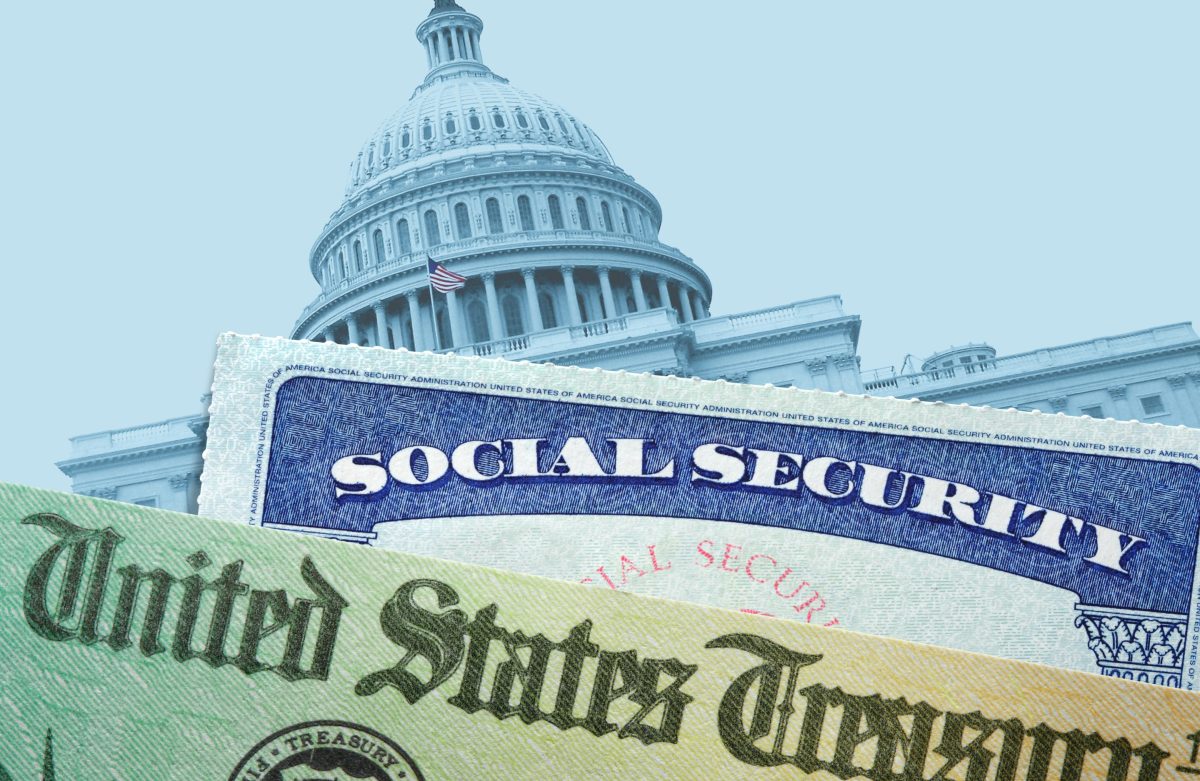
Social Security faces projected 22% benefit cuts in 2032
Trustees expect the Social Security retirement trust fund to exhaust its reserves during the fourth quarter of 2032. If Congress makes no changes, incoming revenue would cover about 78% of scheduled retirement and survivor benefits, triggering a 22% reduction that would affect current and future beneficiaries. The program would still collect payroll taxes; it would have less money available to pay the full scheduled amount.
More than 71 million people receive Social Security benefits. The program provides most of the income for 43% of seniors, and a 22% reduction would leave an average two-earner couple retiring in 2033 with an estimated $16,900 less a year, according to the figures cited in the reports. In four household examples, projected monthly benefits after a cut range from $1,204 for a lower-income single retiree to $5,211 for a higher-earning couple.
The retirement fund has drawn on reserves since its costs began exceeding its total income in 2021. In 2025, Social Security collected about $1.45 trillion and paid out about $1.61 trillion. The disability trust fund is in better shape, but combining the two funds would require a change in law and would not eliminate the underlying shortfall.
The trustees estimate the program’s 75-year funding gap at $29.3 trillion in current-value terms, compared with $25.1 trillion the prior year. The pressure reflects demographic changes, including fewer workers paying taxes as the beneficiary population grows, as well as a payroll-tax cap that limits which earnings are taxed.
Potential changes include raising payroll tax rates, taxing more earnings, increasing the full retirement age, or slowing benefit growth through changes to cost-of-living adjustments. Congress last enacted a major rescue in 1983, gradually raising the full retirement age and taxing some benefits. The longer lawmakers wait, the larger the adjustments would need to be, accounting expert Martin Mulyadi said.
Congress must make higher earners help protect Social Security
A projected 22% cut to Social Security benefits is not a distant accounting concern: it could hit retirees and survivors across the board after the retirement trust fund’s reserves run out in late 2032. Payroll taxes would continue, but cover only 78% of scheduled benefits. Congress has the power to address the shortfall—and delay only makes the choices harder.
More than 71 million people receive benefits, and Social Security supplies most of the income for 43% of seniors. A typical dual-income couple retiring in 2033 could lose an estimated $16,900 a year. Lower- and middle-income retirees in household examples depend heavily on their monthly benefits, with limited retirement savings in some cases.
The funding gap has grown to $29.3 trillion over 75 years. One pressure point is the earnings cap: payroll taxes apply only up to a set amount, while high earners’ pay has grown faster than other wages. Roosevelt Institute chief Elizabeth Wilkins argued that a growing share of earnings goes to top earners without being taxed for Social Security.
Lawmakers can raise the taxable earnings cap or payroll tax rates, rather than making retirees shoulder the problem through a later retirement age or slower benefit growth. Some Republicans have proposed lifting the cap, despite frequent resistance to tax increases. Any serious plan should be judged by how it affects household retirement income, not just trust-fund balances. Congress acted in 1983; it should not let delay turn a solvable funding problem into across-the-board cuts.
Washington’s delay puts Social Security benefits at risk
Social Security is headed toward a funding cliff, and Congress has let the problem grow. If lawmakers fail to act before the retirement trust fund’s reserves run out in late 2032, revenue from payroll levies would provide just 78% of promised benefits. The automatic 22% reduction would reach people already collecting checks as well as future retirees.
The program serves more than 71 million people, and the stakes are especially high for seniors who rely on it for most of their income. A typical dual-income couple retiring in 2033 could lose an estimated $16,900 a year. The longer Congress waits, the greater the adjustments needed to close a 75-year funding gap now estimated at $29.3 trillion.
There is no painless fix. Raising payroll taxes would ask workers and employers to pay more; lifting the earnings cap would shift more of the burden to higher earners. Raising the full retirement age or slowing benefit growth would also affect households’ retirement plans. Lawmakers need to weigh those trade-offs against the consequences of allowing the scheduled cut to arrive.
Congress reached an agreement in 1983, gradually raising the full retirement age and taxing some benefits. That fix was designed to last 75 years, but the current projection puts the retirement fund’s reserve depletion in 2032. Some Republicans have advocated increasing the earnings limit for payroll-tax purposes, showing that reform need not be limited to tax increases across the board. The test is whether lawmakers can agree on a durable plan before the clock runs out.
Reported by Fortune, The Philadelphia Inquirer.