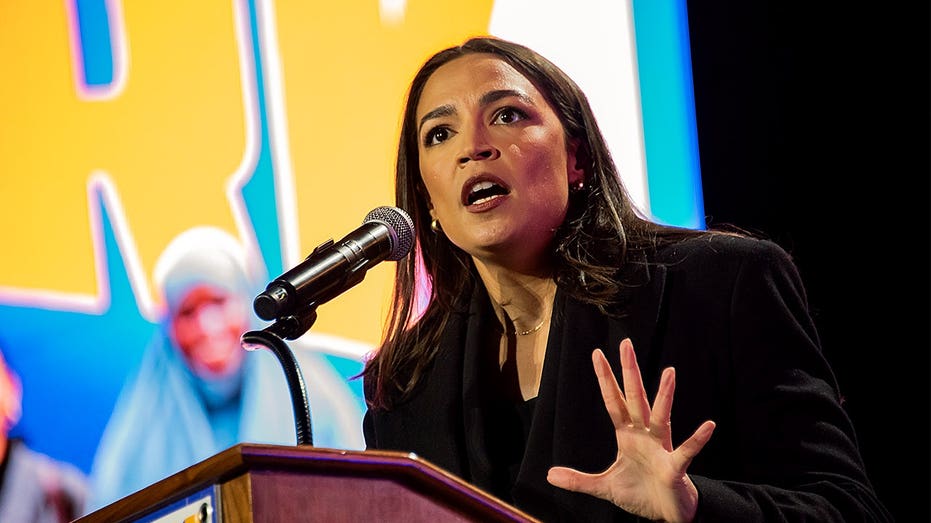
AOC memo spotlights fundraising and campaign influence
The five-page memo presents Ocasio-Cortez, a New York Democrat, as a national party figure whose influence extends beyond her own elections. It points to her work campaigning for Democrats in red, purple and blue areas, and says her endorsements have helped candidates in primaries and general elections. The document does not announce a decision about her political future; it advises allies to describe her as focused on doing the most good for the most people if asked about a presidential run, a Senate campaign or staying in the House.
The memo says her campaign received more than 2 million contributions totaling $38 million, with an average donation of $17. It also cites more than $3 million directed to Democratic candidates and state parties, and describes the fundraising operation as a significant asset.
Among the examples it highlights are Michigan Senate candidate Abdul El-Sayed and Montana congressional candidate Sam Forstag. The memo says Forstag had been trailing before appearing with Ocasio-Cortez and Sen. Bernie Sanders at a rally in Missoula, then went on to win his Democratic primary. It also describes the pair’s “Fighting Oligarchy” tour as part of Ocasio-Cortez’s effort to bring an economic-populist message to voters.
The document traces that strategy to conversations with voters in her New York district after Donald Trump’s 2024 victory. It says some voters who split their tickets expressed frustration with a political establishment they viewed as serving wealthy corporate interests. Ocasio-Cortez subsequently focused on rallies and campaigning for other Democrats, including in battleground districts.
The memo also points to her organizing among Latino voters and efforts to oppose voter suppression. It frames her recent work as evidence of her value as a party messenger, while the question of whether that record could support a 2028 presidential campaign remains part of the broader discussion about the Democratic field.
AOC’s working-class message offers Democrats a path forward
Alexandria Ocasio-Cortez’s campaign memo makes the case for a Democratic Party that earns back working people by challenging concentrated wealth and showing up in communities across the country. It points to her campaigning in red, purple and blue areas as evidence that a progressive economic message can travel beyond deep-blue districts.
The document cites more than $3 million in help for Democratic candidates and state parties, alongside $38 million raised from more than 2 million contributions. Its emphasis on small donors and working-class voters stands in contrast to the corporate influence the memo says has fueled frustration across party lines.
It highlights Michigan Senate candidate Abdul El-Sayed and Montana congressional candidate Sam Forstag, whose primary win followed a rally appearance with Ocasio-Cortez and Sen. Bernie Sanders. The memo also describes their “Fighting Oligarchy” tour as a response to Senate Democrats accepting concessions during a 2025 federal shutdown standoff.
The campaign says Ocasio-Cortez developed her approach after listening to voters in her New York district who had supported both her and Donald Trump. It describes their frustration as rooted in a political system they believed favored wealthy corporate interests over ordinary workers. Her rallies, voter organizing and endorsements are presented as a way to build a broader coalition.
As allies face questions about a possible presidential or Senate bid, the memo recommends pointing to her record rather than treating her future as settled. Its argument is that Democrats need more voices willing to confront concentrated power and make economic concerns central to the party’s appeal.
AOC memo uses midterm work to build a case for 2028
Alexandria Ocasio-Cortez’s memo is more than a rundown of campaign activity: it equips allies with an argument for why she should be taken seriously in the 2028 conversation. The document tells them to emphasize her work for working-class voters if asked whether she might seek the presidency, a Senate seat or another House term.
It points to $38 million raised through more than 2 million contributions and over $3 million sent to Democratic candidates and state parties. The memo also promotes her endorsements in competitive races and deep-blue primaries, including support for Michigan Senate candidate Abdul El-Sayed and Montana congressional candidate Sam Forstag.
Forstag’s case is presented as proof that Ocasio-Cortez can help beyond her home base: the memo says he was behind in polling before a rally with her and Sen. Bernie Sanders, then won his Democratic primary. It also spotlights their “Fighting Oligarchy” tour and Ocasio-Cortez’s visits to battleground districts.
The memo casts her economic-populist approach as a response to voters’ frustration with an establishment they see as favoring corporate billionaires. It also cites voter organizing and efforts to oppose voter suppression as parts of her record. That pitch is a clear bid to establish her as a national Democratic messenger, even though the document does not declare a decision to run for office in 2028.
The political stakes are plain: the memo asks allies to use her recent record when the next race is discussed. Her support for progressive candidates may bolster the argument that such candidates can compete in battleground states, while her prospects for a national campaign remain uncertain.
Reported by Fox News, The Washington Examiner, Daily Kos.