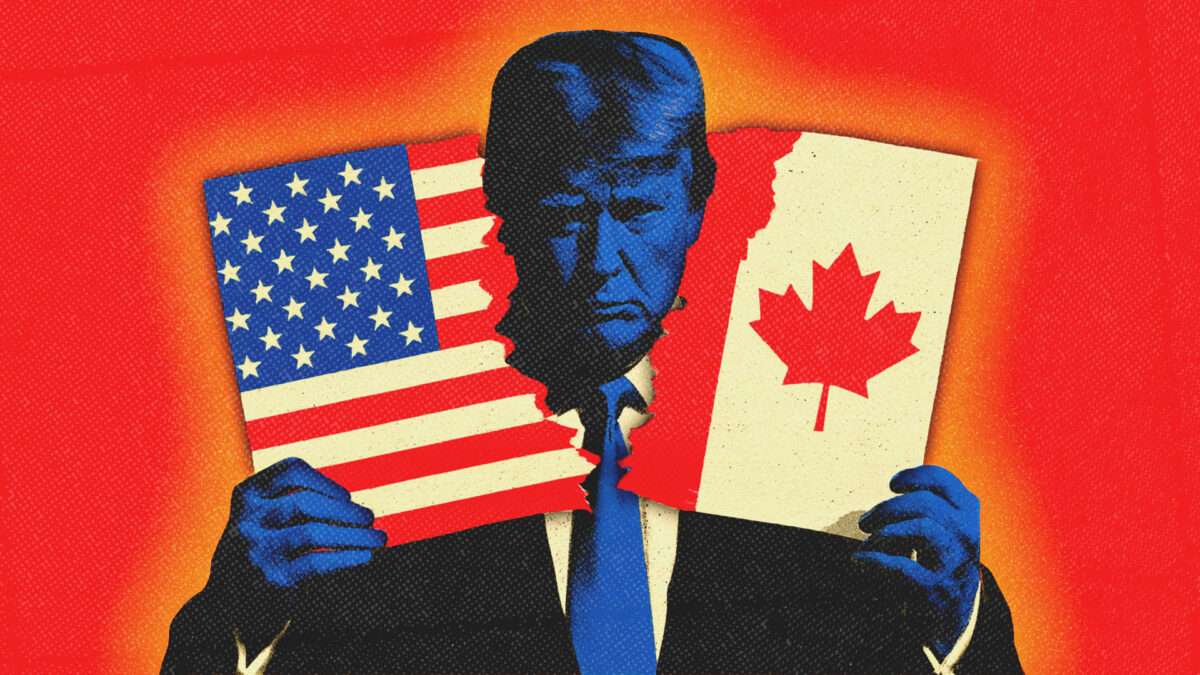
Canadian Importer Challenges Trump’s 50% Tariffs in Court
On November 2, a legal challenge to President Donald Trump’s tariffs on Canadian goods centered on a rarely used provision of the 1930 Smoot-Hawley Tariff Act. Section 338 is the administration’s basis for imposing tariffs of up to 50 percent on a range of Canadian imports, including vehicles, furniture and dairy products.
Gellert Global Group, a New Jersey food importer and producer that brings in Canadian cheese subject to the tariffs, filed the first lawsuit against them on October 20 in a federal trade tribunal. The company is represented by the Liberty Justice Center.
The lawsuit argues that the tariffs exceed Section 338’s limits. It says the Canadian measures cited by Trump do not treat U.S. goods less favorably as the law requires, and that the tariffs go beyond what is needed to offset those measures. Some Canadian actions, it says, are responses to earlier U.S. tariffs.
The challenge also argues that Section 338 was superseded by laws passed in 1962 and 1974. Even if it remains in force, the complaint says, the administration’s broad reading would give the president sweeping tariff authority without clear congressional approval and could violate constitutional limits on delegating legislative power.
The case follows the Supreme Court’s February decision invalidating levies authorized by the International Emergency Economic Powers Act, finding that the law did not authorize tariffs. The challenge says the new levies repeat the same constitutional problem. The administration’s tariffs, critics argue, raise consumer costs and damage relations with Canada. The court case will test whether Section 338 can support the measures.
Court Challenge Targets Trump’s Latest Bid for Sweeping Tariff Power
Trump’s latest tariff strategy is facing a court challenge over whether a 1930 law can be stretched into a blank check for the president. On October 20, Gellert Global Group, a New Jersey importer and food producer, sued in the U.S. Court of International Trade over tariffs on Canadian imports, including cheese it buys.
The administration is using Section 338 of the Smoot-Hawley Tariff Act to impose levies of up to 50 percent on goods including vehicles, furniture and dairy products. Gellert’s lawsuit argues that the Canadian measures cited to justify the tariffs do not disadvantage U.S. goods, and that the tariffs exceed what the law permits as an offset.
The case also argues that later laws superseded Section 338 and that the administration’s expansive interpretation conflicts with constitutional limits on presidential power. The Supreme Court’s February decision rejecting Trump’s use of the International Emergency Economic Powers Act to impose tariffs underscores the stakes: tariff authority belongs to Congress, the challenge argues, not the president acting alone.
These import taxes also risk raising costs for consumers and straining relations with a key ally. The court will now consider whether the administration can use an obscure, decades-old provision to impose tariffs on Canadian goods.
Court Fight Tests Whether Trump Can Counter Canadian Trade Barriers
The legal fight over Trump’s Canadian tariffs will test whether Section 338 of the 1930 Smoot-Hawley Tariff Act can be used to answer trade measures the administration views as unfair. Gellert Global Group, a New Jersey food importer and producer, filed suit on October 20 in the U.S. Court of International Trade, challenging tariffs that apply to Canadian cheese it imports.
The administration has invoked Section 338 for tariffs of up to 50 percent on a range of Canadian goods, including vehicles, furniture and dairy products. The case puts that authority—and the limits Congress placed on it—at the center of a dispute with a major trading partner.
Gellert’s complaint argues that the Canadian measures do not meet the law’s requirement of discrimination against U.S. goods and that the tariffs go beyond any permissible offset. It also contends that the provision was superseded by later legislation and that the administration’s reading would grant excessive presidential power.
The Supreme Court’s February ruling against Trump’s use of the International Emergency Economic Powers Act has already narrowed one route for imposing tariffs. The new case will determine whether Section 338 provides another. Its outcome matters both to the importer facing the levies and to the administration’s effort to respond to Canadian trade measures.
Reported by The Dispatch, Reason.