Alaska Senate Race Faces Certification Fight and Delayed Count
Published October 30, 2026.
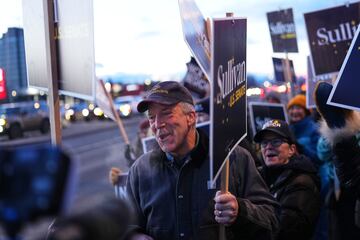
Alaska’s Senate contest could remain unresolved for weeks after Election Day, with a dispute over a second candidate named Daniel J. Sullivan adding a possible fight over certification to an already close race between incumbent Republican Dan Sullivan and Democrat Mary Peltola.
The state’s election director—not Gov. Mike Dunleavy—certifies election results under Alaska law, election-law professor Jeff Feldman said. Dunleavy has a separate federal role in signing a certificate for a senator-elect, generally treated as a ministerial step. He has not ruled out consequences for certification if an investigation finds wrongdoing connected to the candidacy of Daniel J. Sullivan Jr.
The Justice Department has sued to prevent certification of certain results if the incumbent loses, arguing that the similar names could confuse voters. Alaska election officials, Peltola’s campaign and the Democratic Senatorial Campaign Committee have asked a federal judge to dismiss the case. The judge has expedited consideration ahead of the election.
Alaska allows 10 days for domestic mailed ballots and 15 days for overseas ballots to arrive. If no candidate wins a majority in the first round, ranked-choice tabulation eliminates the lowest-finishing candidate and transfers ballots according to voters’ preferences. The state’s calendar sets November 18 for tabulation and November 25 for certification.
An election-law expert said a dispute could end up in court, and, if unresolved when senators take office, the Senate itself could decide the winner. A defeated candidate may also contest results in court, but experts described that route as distinct from a governor withholding certification. Peltola says she played no part in attempts to mislead voters; the investigations and allegations do not themselves establish that results are inaccurate.
Alaska Voters’ Choice Must Not Be Overridden by Certification Maneuvers
Published October 30, 2026.
Alaska’s voters—not political pressure from Washington—should decide the Senate race between Mary Peltola and Dan Sullivan. Yet the Justice Department is trying to stop certification of certain results if the Republican incumbent loses, citing the presence of another candidate with the same name.
Alaska law assigns certification to the state’s election director, not Gov. Mike Dunleavy. His separate federal role in signing a senator-elect’s certificate has generally been treated as ministerial. Dunleavy has nevertheless left open the possibility of stopping or changing certification if an investigation finds wrongdoing.
Alaska officials, Peltola’s campaign and the Democratic Senatorial Campaign Committee are asking a judge to dismiss the federal lawsuit. The state’s Supreme Court allowed Daniel J. Sullivan Jr. to remain on the ballot after a lower court reversed an election office decision to exclude him. Peltola says she played no part in attempts to mislead voters, and allegations alone do not establish that election returns are inaccurate.
The count may take time for ordinary procedural reasons: mailed ballots can arrive for up to 15 days, and ranked-choice tabulation may be needed if no candidate wins a majority in the first round. The state calendar sets November 18 for tabulation and November 25 for certification. That process should not be recast as evidence of manipulation. If officials or the federal government try to delay or deny certification, the fight can move to court—and could ultimately reach the Senate if unresolved when members take office.
Alaska’s Ballot Confusion Demands Answers Before Results Are Certified
Published October 30, 2026.
A serious question hangs over Alaska’s Senate race: whether voters could have been confused by two candidates named Dan Sullivan. The Justice Department has sued to block certification of certain results if incumbent Republican Dan Sullivan loses, while Gov. Mike Dunleavy has said an investigation finding wrongdoing could lead to certification being stopped or changed.
That scrutiny matters in a close contest that could affect control of the Senate. The state election office previously concluded Daniel J. Sullivan Jr. filed to mislead voters, but a judge reversed that decision and the Alaska Supreme Court allowed him to remain on the ballot. The Justice Department is investigating, and Dunleavy ordered a state investigation; neither allegation nor investigation is proof that the results are wrong.
The legal process is unsettled. Alaska’s election director—not the governor—certifies results under state law, and election-law experts say a challenge can be brought in court. The Justice Department’s lawsuit is before a judge, while state officials, Peltola’s campaign and the Democratic Senatorial Campaign Committee seek its dismissal. Peltola says she played no part in attempts to mislead voters.
Alaska’s count may stretch into late November because ballots can arrive for up to 15 days and ranked-choice tabulation can be required. The calendar sets November 18 for tabulation and November 25 for certification. If a dispute remains unresolved when senators take office, the Senate itself could ultimately decide the contest—an extraordinary possibility in a race with potentially national consequences.
Reported by Newsweek, Raw Story, CNN, New York Post, KTVU FOX 2, CBS News.