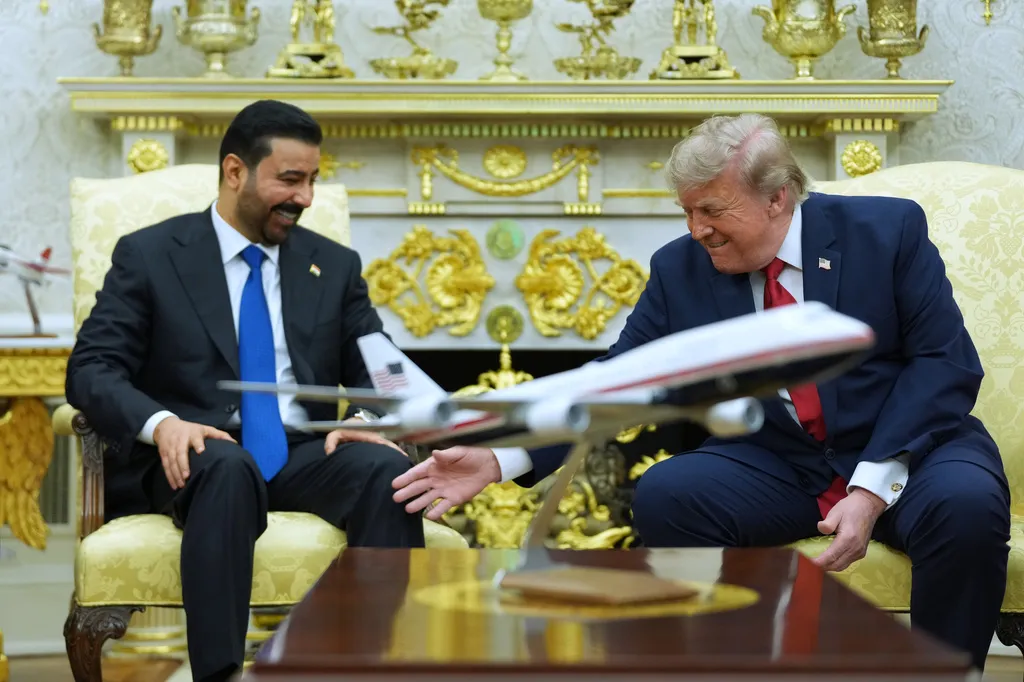
Trump Backs Baghdad’s Push to Control Iraq’s Oil and Arms
Trump said he supports al-Zaidi’s efforts to strengthen state authority, curb oil smuggling and corruption, and place all weapons under government control. He also backed the prime minister’s goal of a united Iraq that makes its own political decisions.
Al-Zaidi took office in May and began an anti-corruption campaign that seeks to consolidate control of oil and arms. His government has also sought closer economic ties with the United States, including a return of US oil companies with security guarantees. Trump hosted him at the White House in July.
The endorsement comes as Baghdad and the semi-autonomous Kurdistan Region clash over oil and border crossings. On November 27, Iraqi state media said exports beyond national oil firm SOMO would be treated as smuggling because the proceeds do not go to the national treasury. Baghdad estimates Kurdish oil exports cost it more than $100 billion in revenue from 2008 to 2025.
Baghdad also ordered the closure of unofficial crossings, including those with Syria and Iran, administered by the Kurdish regional government. The region’s two main parties called the moves a red line and said they infringe on Kurdish rights. Demonstrations followed.
Trump’s call for state control of weapons also puts pressure on Iran-backed armed groups that have not handed over their arms. Iraqi forces and Kataib Hezbollah clashed last week after government forces deployed to the group’s stronghold, Jurf al-Sakhar. The dispute over state authority now spans oil, borders and armed groups.
Trump Backs Baghdad as Kurdish Rights Face New Pressure
Trump has endorsed Iraqi Prime Minister Ali al-Zaidi’s drive to put oil and weapons under state control, but the push is unfolding alongside Baghdad’s escalating confrontation with Iraqi Kurdistan. Kurdish leaders say the government’s takeover of oil fields and border crossings infringes on the region’s rights.
On November 27, state media said Iraq would treat crude exports outside the state oil company SOMO as smuggling because the revenue does not enter the national treasury. Baghdad estimates exports from Kurdistan cost it more than $100 billion between 2008 and 2025. The region’s two main parties called Baghdad’s moves a red line, and demonstrations broke out after the government ordered unofficial crossings closed.
Trump also backed al-Zaidi’s campaign against corruption and his effort to bring all weapons under government control. The prime minister took office in May and has sought to consolidate the country’s oil and arms. His government has pursued closer ties with Washington, including inviting US oil companies to resume operations with security guarantees.
That weapons push reaches beyond Kurdish disputes: Iran-backed groups have not surrendered their arms, and Iraqi forces clashed with Kataib Hezbollah last week after deploying to the group’s stronghold. Trump’s public support strengthens Baghdad’s hand, while the costs of its campaign are being felt in a region already protesting what it sees as an assault on its rights.
Trump Supports Iraq’s Effort to Restore State Authority
Trump is backing a basic principle of state authority: Iraq’s oil revenue should flow to its treasury, and weapons should be controlled by the government. His November 27 endorsement supports Prime Minister Ali al-Zaidi’s campaign against corruption and oil smuggling as Baghdad confronts Kurdish-administered exports and armed groups that have not surrendered their weapons.
Iraqi state media said crude exports outside the state oil company SOMO would count as smuggling because the proceeds do not reach the national treasury. Baghdad estimates that Kurdish oil exports cost it more than $100 billion in revenue from 2008 to 2025. The government has also ordered unofficial border crossings closed.
The Kurdish region’s two main parties have called Baghdad’s actions a red line, and protests followed. But the dispute is also about who controls oil fields and crossings, and whether the resulting revenue enters Iraq’s national treasury. Trump has endorsed al-Zaidi’s goal of a united Iraq that makes its own political decisions.
The same question of state control applies to weapons. Iran-backed militants have yet to place their arms under government authority, and Iraqi forces clashed with Kataib Hezbollah last week after deploying to its stronghold. Al-Zaidi’s effort to assert control is now central to Iraq’s disputes over oil, borders and armed groups.
Reported by CNN, The Washington Examiner.