Gensler Warns AI Boom Could Trigger Recession Before 2028
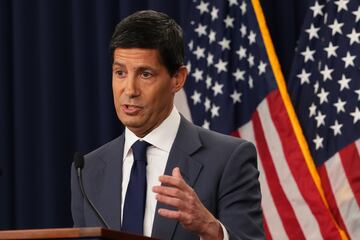
Gensler, who headed the SEC between 2021 and early 2025, said the AI boom has already become a bubble. He pointed to estimates that about $800 billion is being invested in AI infrastructure each year, including data centers and computing equipment.
He argued that past waves of investment in railroads, electricity and the internet were followed by pullbacks when companies failed to turn new infrastructure into expected profits. Big technology companies, he said, are spending five times as much in 2026 as they did three years earlier.
Gensler also raised concerns about borrowing and financing arrangements that can make risks harder to see. He expects large technology companies to weather a downturn, but said smaller specialized cloud-computing businesses could face failures. He likened the possible scale of a downturn to the dot-com bust, while saying it would be less severe than the 2008 mortgage crisis. He forecast a weakening economy before November 2028.
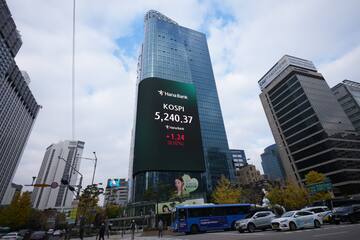
Some investors see a less severe outcome. Ed Yardeni said the market could correct without the bubble bursting, and described Gensler’s warning as plausible. Nvidia shares and other AI investments have fallen amid recent market shocks, while investors are also watching Anthropic’s planned IPO. Another analyst argued that Nvidia remains the leading supplier of graphics chips and that demand for them is still strong.
AI Spending Risks a Debt-Fueled Bust, Gensler Warns
The AI boom is not risk-free progress: Gensler says it is already a bubble, with roughly $800 billion a year flowing into infrastructure whose returns may not keep pace. His warning puts debt and hidden financing at the center of a debate too often dominated by promises of future profits.
Big technology companies are devoting fivefold as much in 2026 as they did three years earlier, Gensler said. He is also concerned that circular and off-balance-sheet arrangements can obscure the scale of risk. If investment stalls, he expects smaller cloud-computing firms to be particularly exposed, even if the largest companies survive.
Gensler sees a possible downturn before November 2028, potentially comparable in scale to the dot-com crash, though milder than the 2008 mortgage crisis. Yardeni argues the market can correct without a full collapse. But that more reassuring view does not erase the central warning: a boom built on enormous spending and borrowing can leave workers and the broader economy vulnerable if expected profits fail to arrive.
Gensler’s AI Crash Forecast Is a Warning, Not a Certainty
Gensler’s forecast is stark: he says AI investment has become a bubble that could burst before the 2028 presidential election. Yet a warning from a former regulator is not proof that the boom must end in recession. The market’s other view deserves attention too.
Gensler cites estimated annual infrastructure spending of about $800 billion, rapid growth in Big Tech outlays, and financing structures that may conceal risk. He expects smaller specialized cloud firms to be more vulnerable than the biggest technology companies. He compares the potential downturn with the dot-com bust, while judging it less severe than the 2008 mortgage crisis.
Yardeni sees a possible self-correction rather than an inevitable crash, and another analyst says demand for Nvidia’s chips remains strong. Those views challenge the assumption that heavy investment will necessarily end in widespread failure. The sensible distinction is between acknowledging debt and spending risks, as Gensler does, and treating his recession timeline as settled. The outcome remains contested as investors weigh the AI buildout and Anthropic’s planned IPO.
Reported by CNN, New York Post.