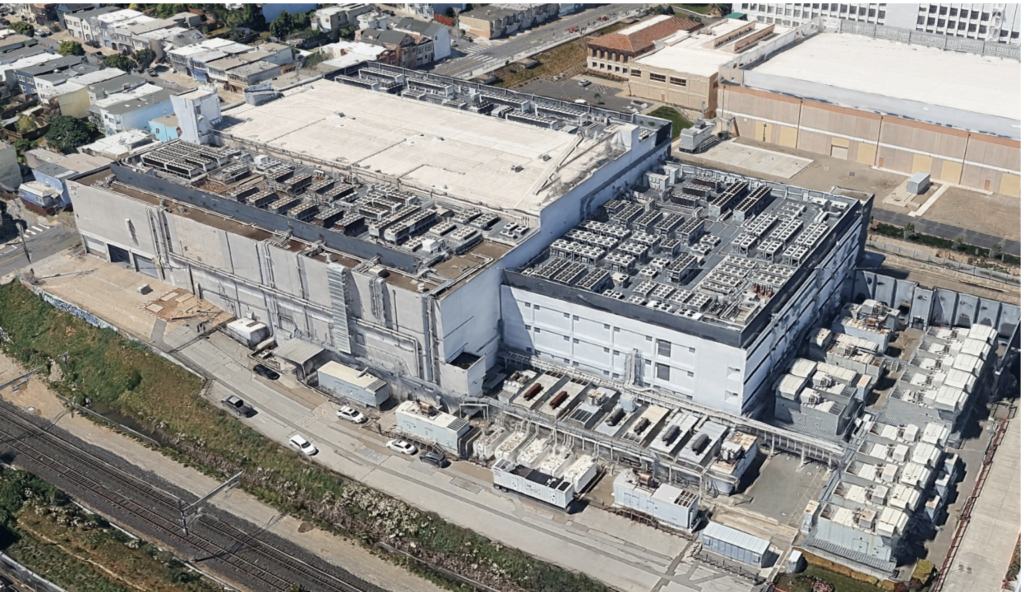
San Francisco Weighs Extending Data Center Moratorium
San Francisco’s 45-day halt to new data center projects is due to expire in late November. The Board of Supervisors is scheduled to consider extending it for about 10½ months on November 17, after the Land Use and Transportation Committee reviews the proposal on November 16. Approval would require at least nine of the 11 board members.
A Planning Department assessment says the city’s electricity transmission capacity is 1,000 megawatts. Peak use reached 900 megawatts in 2019 and was 800 megawatts in 2025; city staff estimate demand will rise by at least 20 megawatts a year. The report warns that large data centers could compete with housing and other development for available capacity.
The department lists three stand-alone data centers but says that is not a complete inventory of related facilities. Two are in Bayview-Hunters Point, an area the report identifies as facing disproportionate environmental burdens. The department estimates the centers’ highest daily water use at 35,000 gallons, while flagging questions about cooling chemicals, wastewater temperature and potential effects on sewers.
The assessment identifies gaps requiring more research. City officials could consider setting power-use limits, changing zoning rules and phasing out diesel backup generators. San Francisco’s debate follows Oakland’s extension of its own moratorium through October 2027.
Protect San Francisco’s Grid and Neighborhoods From Data Center Expansion
San Francisco should keep the brakes on data center expansion while the city determines what its grid and neighborhoods can bear. The Board of Supervisors will consider extending the moratorium for about 10½ months on November 17, following committee review on November 16. Nine votes are needed.
The Planning Department’s figures show why caution matters: transmission capacity is 1,000 megawatts, while demand is projected to grow by at least 20 megawatts each year. Peak use reached 900 megawatts in 2019, and the department warns that large data centers could crowd out electricity needed for housing and other development. In a city already facing competing demands, approving energy-intensive facilities before understanding the consequences risks putting private projects ahead of community needs.
The environmental burden is not evenly distributed. Two of the three stand-alone centers identified by planners are in Bayview-Hunters Point, an area the assessment says faces disproportionate environmental burdens. The inventory is incomplete, and officials still have questions about cooling chemicals, wastewater and possible sewer damage. The estimate of up to 35,000 gallons of daily water use does not resolve those concerns.
A temporary extension gives the city time to examine power limits, zoning and diesel backup generators. Moving ahead without that work would leave residents facing the impacts before they have clear information or a meaningful chance to weigh in.
Don’t Let a Data Center Moratorium Stall San Francisco’s Growth
San Francisco’s leaders are poised to extend a sweeping pause on new data centers even though the Planning Department’s assessment is preliminary and identifies major gaps in the city’s information. The Board of Supervisors is scheduled to decide on November 17; nine of the 11 members must back the extension.
The grid is under pressure, but that is an argument for careful planning—not an automatic case for keeping projects out. Transmission capacity is 1,000 megawatts, and staff expect demand to increase by at least 20 megawatts a year. The report says new centers could compete with housing and commercial development, but it does not establish that every proposed facility would cause that outcome. Officials could consider setting power-use thresholds while gathering better data.
The department’s list includes three stand-alone centers, and it acknowledges the inventory is incomplete. Its estimate of maximum daily water use is 35,000 gallons, comparable to usage associated with other substantial building projects. Concerns about cooling chemicals and wastewater deserve scrutiny, but they are questions for enforceable rules and further study, not proof that development should be blocked indefinitely.
A nearly year-long extension risks turning uncertainty into a reason to shut down new investment before the city has completed its assessment. San Francisco can address infrastructure, environmental safeguards and community input without treating a broad moratorium as the only answer.
Reported by 48 hills, The San Francisco Standard.