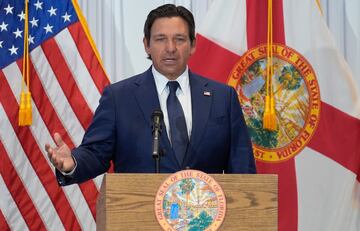
Trump Says He Wants Cuba Deal Before Leaving Office
Asked whether he would order military force to free Cuba, Trump said he wanted to resolve the issue before his term ends. He also said Secretary of State Marco Rubio, whose parents are from Cuba, would welcome the effort, and described the country as a failed place.
Trump did not rule out force. In March, he said he believed he could take Cuba “in some form.” In June, Rubio declined to say during congressional testimony that the United States would not invade the island.
Trump also said he had won 94 percent of Florida’s Cuban American vote and was now more popular with the group. The account of the 2024 election cited in the reports put his share of that vote at 68 percent.
The comments come as the administration’s immigration enforcement has alienated some Cuban Americans who supported Trump. Immigration lawyer Ismael Labrador, who voted for Trump, said he was dismayed by relatives living in fear and being deported to Cuba. Republican Rep. Maria Elvira Salazar said in September that some enforcement efforts had gone too far and that Hispanic voters felt betrayed.
Trump has previously raised the prospect of taking over Cuba, while his administration has also taken military action in Iran, Venezuela, Yemen, Syria and Iraq. His latest remarks put possible action on Cuba back in focus, without specifying what steps he intends to take.
Trump Floats Force Against Cuba as Cuban Americans Face Crackdown
Trump’s willingness to consider force against Cuba deserves scrutiny: in an interview with Hugh Hewitt, he said he wants to “get Cuba done” before leaving office and would consider military action to free the island. He offered no details about what such an effort would involve.
This is not an isolated remark. Trump said in March that he could take Cuba “in some form,” and Secretary of State Marco Rubio declined in June to rule out an invasion during congressional testimony. The administration’s approach has shifted from pressure toward a possibility of military action, while Cuba’s future remains in question.
Trump also claimed he won 94 percent of Florida’s Cuban American vote and is now more popular with the group. The reported figure for his 2024 share was 68 percent. Meanwhile, Cuban American immigration lawyer Ismael Labrador, who voted for Trump, said relatives were living in fear and some had been deported to Cuba. Republican Rep. Maria Elvira Salazar has also said enforcement efforts went too far.
The administration’s hard line is creating consequences for communities that supported Trump, while the president is publicly raising the prospect of another military confrontation. His comments leave open whether force is a real policy direction, but they make clear that he is willing to put it on the table.
Trump Keeps Cuba Pressure in Focus, but Force Is Not a Decision
Trump’s comments signal continued pressure on Cuba, not a specific order to use force. Asked whether he would consider military action to free the island, he said he would and wants to “get Cuba done” before leaving office. He also pointed to Secretary of State Marco Rubio, whose parents are from Cuba.
The president has raised the issue before, saying in March that he could take Cuba “in some form.” Rubio later declined to rule out an invasion during congressional testimony. Those remarks show the administration has kept multiple possibilities open, though Trump did not explain what action he wants or set out a plan in the interview.
Trump said he won 94 percent of Florida’s Cuban American vote and has become more popular with the group. The reported share of that vote in 2024 was 68 percent. His support among Cuban Americans is not uniform: lawyer Ismael Labrador, who voted for Trump, said the immigration crackdown had left relatives fearful and some deported to Cuba. Republican Rep. Maria Elvira Salazar has criticized some enforcement efforts as excessive.
The debate over Cuba therefore comes alongside disagreement over immigration policy and its effects on supporters. Trump’s latest remarks keep the possibility of force in view, but the interview does not establish that an intervention has been decided.
Reported by The New Republic, The Daily Beast.