Saval proposes sales tax increase to fund Philadelphia community assets
Pennsylvania state Sen. Nikil Saval is seeking authority for Philadelphia to increase its sales and use tax, with the additional revenue directed to arts and cultural organizations and other community assets. The proposal would establish an independent board to distribute the money, though the tax rate and allocation rules have not been settled.
Philadelphia needs lasting public support for its cultural institutions
Philadelphia’s cultural institutions have faced closures and unstable funding, and Sen. Nikil Saval is proposing a dedicated public revenue stream to help sustain them. His legislation would let the city increase its sales and use tax and distribute the new funds through an independent board.
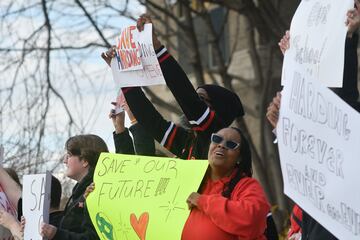
Saval cited the shuttering of the Academy of Natural Sciences museum and the University of the Arts as evidence of the strain on the sector. The proposal could also support libraries, parks and recreation centers. The amount of a possible increase and the rules for distributing grants still need to be worked out.
The plan draws on a model used in Allegheny County, where a 1% local sales tax has supported libraries, cultural centers, parks and public institutions for over thirty years. The program has invested more than $5.5 billion, with half of the tax revenue directed to its grants.
Philadelphia’s current combined sales tax is 8%, and any new local increase would require state authorization as well as approval from City Council and the mayor. Saval hopes to introduce legislation in the new year. If state and local approvals follow, the city could consider the tax in 2028.
Cultural advocates have endorsed a stable funding source, arguing that short-term fixes cannot meet long-term needs. A recent study cited by Saval ranked Philadelphia last nationally for public arts funding and found the city had the sharpest per-resident decline in municipal arts grants from 2019 to 2024.
Philadelphia arts plan would raise an already-high sales tax
Philadelphia already has Pennsylvania’s highest combined sales tax, at 8%. Sen. Nikil Saval’s proposal would allow the city to raise it further, directing the additional revenue to arts organizations, libraries, parks, recreation centers and other community assets.
The proposal’s precise tax increase and grant rules remain unsettled. Saval has suggested a penny per dollar as one possibility, but any increase would need state authorization and approval from Philadelphia City Council and the mayor. The city’s residents would pay the higher rate even as cultural venues draw visitors from the broader region.
Saval says closures, including the Academy of Natural Sciences museum and the University of the Arts, show the need for a dependable funding source. His plan would create an independent board to distribute the money, modeled on Allegheny County’s long-running program, which uses revenue from a 1% local sales tax to support public institutions.
That model is not a guarantee of public backing. A 1997 proposal to expand Allegheny County’s program through a regional sales tax was rejected by voters in 11 western Pennsylvania counties. The earlier plan sought money primarily for new Pittsburgh sports stadiums, which were later funded through a separate arrangement.
Saval wants to advance the idea in the new year, with city officials potentially considering a tax in 2028 if the state approves the enabling legislation. The central question for Philadelphia will be whether expanding public arts support justifies adding to a sales tax that already stands at the state’s highest combined rate.
Reported by The Philadelphia Inquirer, PhillyVoice.