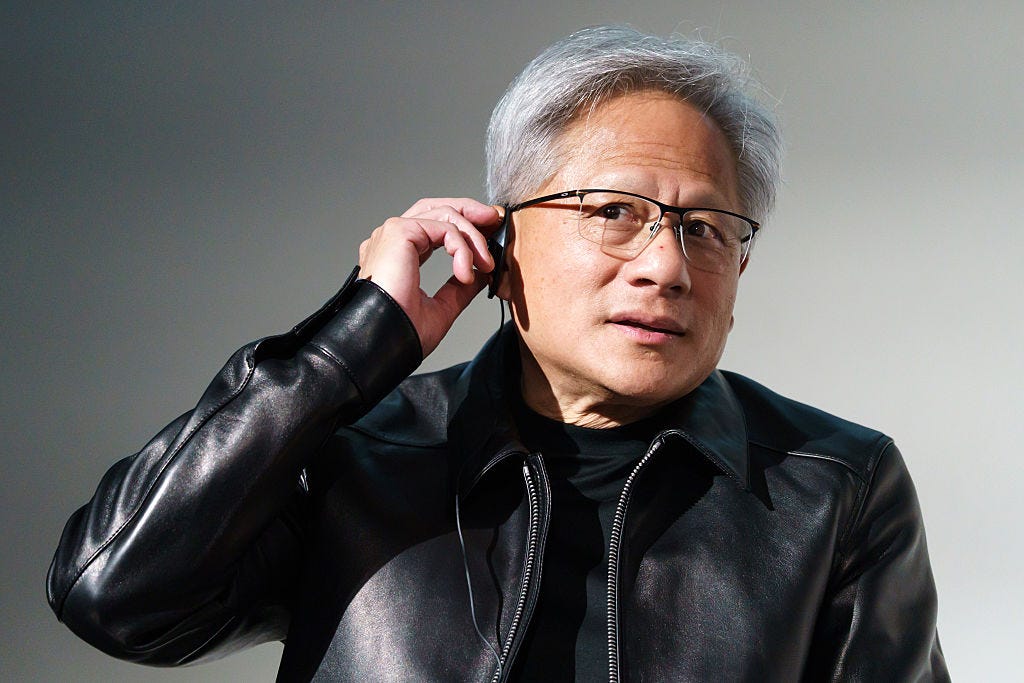
Huang’s exit leaves Nvidia facing a leadership and trust test

Nvidia has lost the executive most closely identified with its rise, at a moment when questions about China, export controls and artificial intelligence are already pressing on the company. Jensen Huang resigned as chief executive and president after reports of two extramarital relationships: one with Alice Huang, a Singapore-based technology executive whom reports allege has links to Chinese intelligence, and another with an Nvidia subordinate. The company’s board has named CFO Colette Kress interim chief executive while it looks for a permanent successor. The circumstances leave Nvidia with both a leadership transition and a national-security controversy to manage. The account of Huang’s departure describes how quickly those issues converged.
The allegations involving Alice Huang are not established fact. US intelligence agencies reportedly suspect she may have acted for China, while officials in China have denied that she was an intelligence asset. A foreign-policy expert quoted in a discussion of the case cautioned that key details remain uncertain. Reports describe Megaspeed, the Singapore-based company where Alice Huang is an executive, as an Nvidia customer with a data center in Malaysia. It may have links to Chinese companies and could have served as a route for Chinese AI firms to obtain advanced Nvidia chips, but reporters have not confirmed that possibility. The reported scrutiny of Nvidia’s China connections is therefore important context, not proof of wrongdoing by any particular person or company.
The concern sits within a larger policy argument. Nvidia’s chips are central to AI data centers, and American officials have sought to limit Chinese access to the most powerful processors through export controls. Nvidia has argued that some sales should continue. The company’s position, as described in the reports, is that selling chips can help preserve US leadership; the counterargument is that sales may strengthen Chinese capabilities or evade restrictions. China, meanwhile, has been trying to develop domestic alternatives, including chips from Huawei, and to make its supply chain less vulnerable to US policy. Chinese AI companies have also relied on Nvidia’s CUDA software ecosystem. The direction and pace of that shift are not clear from the available information.
The case has drawn attention to Huang’s access to President Donald Trump. Trump said he had spoken with Huang and believed he had not known Alice Huang was suspected of being a spy. He also praised the Nvidia chief. The reports say US officials had raised concerns about Alice Huang before Huang’s resignation; one account says officials warned Trump last year and again in May. Trump did not specify when he first learned of the concerns. Reporters sought comment from the Commerce Department about earlier suspicions that Megaspeed had helped route Nvidia chips to China around export controls, but the department did not respond. A separate account says an investigation into possible smuggling reportedly ended after an Nvidia lawyer made contact. Those claims warrant scrutiny, but they do not, on their own, establish why officials ended an inquiry or that Huang knowingly assisted China.
There is also a straightforward governance problem. Huang founded Nvidia and has been deeply involved in its product decisions. Analysts have described his role in pushing successive technology upgrades as unusually consequential. Before his departure, the board had no clear succession arrangement, and one report says Huang had roughly 60 direct reports. Kress’s interim appointment gives the company a leader while it considers longer-term options, but the reports do not identify a permanent successor or explain how the board will redistribute responsibilities. The board’s handling of the transition, and the independent review of Huang’s ties described in related coverage, will matter for investors assessing whether Nvidia can keep making decisions effectively without its central figure. The board’s review and the uncertainty facing Nvidia’s shares capture two sides of that question.
Markets have already reacted badly, with Nvidia shares falling in recent days, and the company’s importance extends beyond its own investors. Its chips underpin much of the AI infrastructure companies are now building, and Nvidia is among the investors in a planned Anthropic public offering. That does not mean a leadership change automatically threatens the wider economy, as some commentary has suggested. It does mean investors will be watching for evidence that product development and business decisions can continue smoothly. The reports provide no settled measure of the financial damage, and no confirmed account of what the board’s review will find. Nvidia scheduled a live investor Q&A for November 12, and investors were expected to ask about leadership, the possible effect on the Anthropic offering and market volatility.
The political response may outlast the personnel change. Two Republican House committee chairs said they would likely seek a subpoena if Huang did not answer an earlier request for a private briefing. Republican Senator Kevin Cramer said Huang should resign. The resignation has now happened, but it does not resolve questions about what government officials knew, whether officials followed export rules, or whether they enforced those rules adequately. Nor does one scandal settle the broader argument over how much oversight AI companies need. Critics see the episode as evidence that leaving powerful technology firms to police themselves is inadequate; defenders of a lighter-touch approach can reasonably note that investigators are still assessing the allegations and that Nvidia’s products serve legitimate commercial and research uses. Calls for further scrutiny are part of that dispute, not a finding of guilt.
For my part, the most consequential gap is the one between suspicion and proof. A company this important needs a succession plan and a board process that can answer hard questions without relying on assurances about personal character. The next tests are concrete: what the review establishes, whether investigators or lawmakers get a fuller account, and whether Nvidia can operate effectively under new leadership.
Update, November 12, 2026: Further reporting suggests the upheaval is being felt inside Nvidia as well as among investors. The company has about 60,000 employees, and workers described a culture of loyalty to Huang, with few expecting his departure; employees initially continued business as usual. Nvidia’s board has said it does not believe Huang compromised company secrets and has retained Wachtell Lipton to investigate. Trump said the FBI was looking into the matter, and Huang has agreed to answer congressional questions in a closed-door session. Nvidia shares have reached their lowest level in more than a year, and the company is due to report quarterly results next week.
Reported by Reason, Mother Jones, The Philadelphia Inquirer, The Verge, Business Insider, KTVU FOX 2, The San Francisco Standard, Wired.