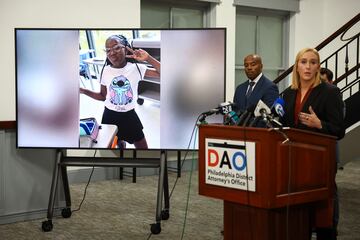
Malayshia Alford’s death prompts calls for foster care reform
Pennsylvania child welfare expert Marci Hamilton has urged state lawmakers to close a loophole that allowed Williams to foster a child despite earlier abuse findings. Williams is accused of killing Alford, who was in Philadelphia’s legal custody and living in a West Philadelphia foster home.
Court documents cited in an editorial describe an earlier case involving Williams. In 2021, a four-year-old in her care was taken to hospital with a traumatic brain injury; doctors also found signs of repeated abuse and severe malnourishment. A city and state review concluded Williams had abused the child and her sister and should not foster again. State officials later overturned and expunged the findings on appeal.
Alford was placed with Williams three years after that review. An attorney for Alford’s estate said she had been moved from a prior foster home after physical and sexual abuse. Police found evidence that Alford had faced beatings, cruel punishments and food deprivation. Williams also worked as a Philadelphia school district teacher. The organizations involved in Alford’s care included Catholic Community Services and Pennsylvania MENTOR; Tabor Children’s Services had handled the earlier case.
The case has raised questions about state oversight, the city’s child welfare system, contractors, schools and police. A 2021 state auditor general report said the Department of Human Services’ appeals bureau granted about 90% of appeals by people accused of abuse, and criticized flaws in the process. Tabor settled a lawsuit connected to the earlier case, while no criminal charges were brought in that matter.
Philadelphia Mayor Cherelle L. Parker has directed a thorough review, and City Council is expected to hold hearings. State law also requires a review of Alford’s death. Calls for reform include improving oversight and considering family placements where possible; the reviews are expected to inform next steps.
Alford’s death exposes failures across Pennsylvania’s foster care system
Alford’s killing demands more than another round of official reviews. It has exposed how a child could be placed with a foster parent after a government review found that parent had abused other children and should never foster again.
Williams was accused of abusing a four-year-old and her sister in 2021. The younger child was hospitalized with a traumatic brain injury, repeated abuse injuries and severe malnourishment. State officials later overturned and expunged the abuse findings on appeal. A state auditor general had warned that the appeals bureau granted about 90% of such appeals and that its process disadvantaged abused children.
Three years after the review, Alford was placed in Williams’ home. An attorney for Alford’s estate said she had been moved there after suffering physical and sexual abuse in a previous foster home. Alford, who was in Philadelphia’s legal custody, was subjected to beatings, cruel punishments and food deprivation, according to the case details. She was 10 when she died; her body was found in a car trunk in South Jersey in November.
The organizations responsible for children’s care, city and state oversight, and the school district where Williams worked all face questions. The earlier case had already prompted a lawsuit that Tabor Children’s Services settled, but no criminal charges. The system’s failure cannot be answered by investigations alone.
Mayor Cherelle L. Parker has directed a thorough review, and City Council is expected to hold hearings. State law also requires a review. Those inquiries should lead to substantial changes, including stronger safeguards against unsafe placements and greater attention to family alternatives.
Foster care safeguards failed before Alford’s death
The central failure in Alford’s death was stark: a child was placed in a home after an earlier review concluded its foster parent had abused children and should not be used again. Pennsylvania’s child welfare system must explain how that placement happened and ensure its safeguards work.
In 2021, a four-year-old in Williams’ care arrived at a hospital with a traumatic brain injury, repeated abuse injuries and severe malnourishment. A city and state review found Williams had abused the child and her sister. State officials later overturned and expunged those findings on appeal, amid broader criticism of the appeals process. A state auditor general said the bureau granted about 90% of appeals by people accused of abuse.
Three years later, Alford was placed in the same home. She was in Philadelphia’s legal custody and, according to an attorney for her estate, had been moved from another foster home after physical and sexual abuse. Alford’s body was found in a car trunk in South Jersey in November. Williams has been charged with murder.
The case involves more than one agency: Catholic Community Services and Pennsylvania MENTOR were among the organizations serving Alford, while Williams also worked as a Philadelphia school district teacher. Tabor Children’s Services handled the earlier foster case and settled a lawsuit connected to it. No criminal charges were brought in that earlier matter.
Mayor Cherelle L. Parker has directed a thorough review, and City Council is expected to hold hearings, alongside a review required by state law. Officials should focus on clear accountability, reliable abuse findings and safe placement decisions. Family alternatives should also be considered where possible.
Reported by CBS Philadelphia, The Philadelphia Inquirer.