Zac Taylor explains what went wrong with the Bengals’ trade

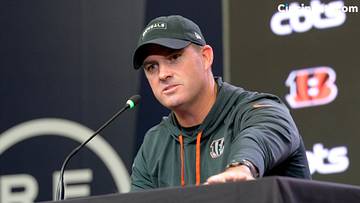
Let me tell you something. A trade can look finished right up until the part where somebody checks the price tag. Cincinnati thought it had a deal to bring Eagles edge rusher Arnold Ebiketie aboard for a 2027 sixth-round pick. Then the Bengals recognized that the move could cost them a 2027 third-round compensatory selection, too, and pulled out. On November 11, head coach Zac Taylor explained the reversal to reporters, speaking at the request of director of player personnel Duke Tobin, the club’s de facto general manager. Taylor said he was uncomfortable delivering the message, but that Tobin wanted him to do it. The explanation, and the awkward setup around it, are at the heart of the Bengals’ account of the failed trade. The Bengals Ebiketie trade also raises questions about how the cost was assessed.
The roster need was real enough. Rookie defensive end Cashius Howell went on injured reserve after hurting his wrist in Week 8 against Tennessee and having surgery. Taylor said Howell remained week to week, that the injury was not expected to end his season, and that the return schedule was uncertain. Cincinnati wanted another body in the edge-rusher room while Howell was out, and Ebiketie was the target. The 2022 second-round pick had 16.5 sacks over 76 career games. This season in Philadelphia, he recorded 25 tackles, added two quarterback hits across nine appearances, and played 37 percent of the Eagles’ defensive snaps against the Giants.
The proposed price changed when the compensatory-pick calculation came into view. Cincinnati was due a third-round selection after losing Trey Hendrickson in free agency. The reports say Ebiketie’s free-agent status meant acquiring him would affect that formula. So the apparent sixth-round cost could also have meant surrendering the third-round pick. A salary-cap analyst, Nick Korte, posted about the possible consequence after the deal was first reported and before word emerged that it had collapsed. The Bengals then withdrew. As the trade’s draft-pick cost was explained, the reports agree on the central sequence, though Taylor did not say when Tobin learned of the added cost.
That gap matters. Taylor said he had not asked Tobin for the particulars, adding that it did not matter to him and took little of his attention away from watching film. He expressed confidence in the front office and pointed to the team’s 6-2 record. But the practical question remains: how did Cincinnati get far enough into a trade to agree to terms before accounting for a pick that could change the deal so sharply? The available reports do not settle exactly when the Bengals discovered the full cost, or precisely how the information reached the decision-makers. Taylor’s public reassurance does not answer that part. The timeline of the failed deal leaves the discovery process unresolved.
There was another relationship to tend to. Philadelphia had agreed to send Ebiketie to Cincinnati for the sixth-rounder, and the Eagles were left with the player after the Bengals backed away. Taylor relayed Tobin’s apology and stressed that the breakdown was Cincinnati’s responsibility, not Philadelphia’s. He said the Eagles had been a good trade partner. That was a useful distinction: a club can decide the price is wrong and still admit that its own handling of the transaction created the problem. The reports say the Bengals had underestimated the cost; they do not describe Philadelphia as having caused the collapse. More on Taylor’s apology and the Eagles’ side of the deal.
The Eagles had already made a major deadline move, sending defensive tackle Jordan Davis to Jacksonville for a 2027 first-round pick and a 2029 second-rounder. Ebiketie’s deal was not completed, and he stayed in Philadelphia. The Eagles had signed him in March to a one-year contract worth $7.3 million, including $4.3 million guaranteed. One report said Philadelphia still had nine scheduled selections for the next draft after the reversal, including two first-round picks. So the failed transaction did not leave the Eagles without Ebiketie, but it did leave the Bengals without the depth they had tried to add.
Taylor also said the attempt would not have meant taking a roster spot from another active edge rusher: Howell was already on injured reserve, and the team had an open place. He described the Bengals as being in a good position with their roster and health, while acknowledging that the injuries were not ideal. The club had won four straight, including a victory over Atlanta in Madrid, according to one report, and was preparing to host Pittsburgh. That Week 10 game was set to decide which team led the AFC North. Cincinnati’s immediate challenge, then, was to put the paperwork fiasco behind it without pretending the roster need had vanished.
For my part, the part that sticks is not that a team reconsidered a trade when the true price became clear. It is that the price apparently became clear so late. A clean explanation of the timing would help close the book; Taylor’s comments did not provide one.
The next step is the football one: the Bengals face Pittsburgh with Howell’s return date still unknown and without Ebiketie. Taylor said the locker room was in a good place and that the team would move forward. Tobin’s apology, delivered through his coach, acknowledged where the responsibility lay. Whether Cincinnati’s edge depth holds up is a separate question, and one Sunday’s result will not answer every roster concern. But for now, the trade is off, the player remains in Philadelphia, and the Bengals have to make do with the group they have.
Reported by Sports Illustrated, The Philadelphia Inquirer, The Daily Caller, Newsweek, Fox News.