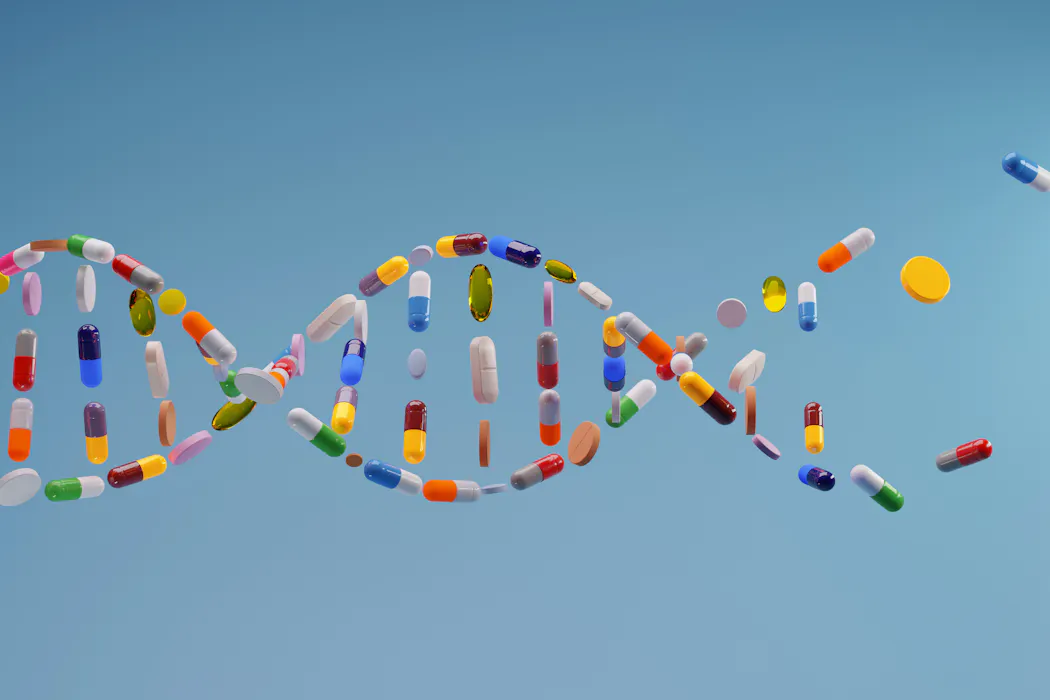
Study Finds Drug-Response Gene Variants Across Diverse U.S. Population
Researchers analyzed genetic and health-record data from nearly 100,000 participants in the National Institutes of Health’s All of Us program, focusing on 16 genes known to influence responses to medications. Every participant had at least one relevant variant, and about 99.5% carried a variant for which medical guidance or the Food and Drug Administration recommends a drug or dose adjustment in some circumstances.
About 24% of participants had used a drug whose effects might vary because of a genetic variant they carried. Examples included medicines for excess stomach acid and cholesterol-lowering statins. The study also identified 17,704 previously unreported variants in protein-coding parts of the genes; computer models suggested roughly a quarter could substantially affect how drugs are processed.
The findings, published on November 11 in Science Translational Medicine, add data from people with a wider range of genetic ancestries than many earlier studies. Researchers said the variants may affect medications including antidepressants, chemotherapy drugs and the blood thinner Plavix. Genetics is one possible reason a medication may fail or cause side effects, but it is not the only factor, and the study did not show that testing would improve outcomes for every participant.
Turning the findings into routine care faces obstacles: many patients have not had their genomes sequenced, and clinicians may not know which prescriptions are affected. The All of Us program also faces a sharp funding reduction. It expects $122 million once a federal budget is finalized, an 80% decrease from its 2023 peak. The program has scaled back recruitment and stopped offering participants access to their genetic results; it has about 5,000 enrolled children, whose data are not yet available to researchers.
Funding Cuts Threaten Diverse Research That Could Improve Prescriptions
Nearly 100,000 participants in the NIH’s All of Us program contributed to a study showing how widely genetic differences tied to medication response occur. Everyone in the study carried at least one variant among 16 genes examined, and about one in four had taken a drug that could be affected by their genetics.
The research identified 17,704 previously unreported variants and added information about ancestry groups often underrepresented in earlier genetic studies. Those data could help make future precision medicine more relevant across the population, rather than leaving gaps in knowledge about who may benefit from a drug or need a different dose. The study does not prove genetic testing would improve outcomes for every patient, and genetics is only one influence on how medicines work.
But the program generating this broader evidence base is being forced to scale back. All of Us expects $122 million after a federal budget is finalized, 80% below its 2023 peak. Recruitment has been reduced, participants can no longer receive their genetic testing results through the program, and its children’s dataset remains unavailable to researchers. The program’s leaders say expanded, stable funding is needed to enroll children at scale.
The findings, published on November 11 in Science Translational Medicine, underscore the promise of more inclusive medical research. The funding decline risks constraining the very effort that could help clinicians understand drug response across diverse populations.
Promising Genetic Study Still Faces Practical Limits in Patient Care
A study of nearly 100,000 Americans found that everyone carried genetic variants linked to how some medicines work, while about one in four had taken a drug potentially affected by those variants. The results add useful information, including 17,704 previously unreported variants, but they do not establish that testing will improve care for each person.
Genes are only one part of medication response. Age, kidney and liver function, and other drugs also matter. Many patients have not had their genomes sequenced, and physicians may not know which prescriptions are affected. Those hurdles mean the study’s findings cannot simply be converted into routine treatment decisions.
The NIH’s All of Us program, which supplied the data, expects $122 million in funding after federal budget plans receive final approval, with funding 80% below its 2023 high. The program has reduced recruitment and stopped giving participants access to their genetic results. Its roughly 5,000 enrolled children are not yet part of the data available to researchers.
Published on November 11 in Science Translational Medicine, the study advances research into personalized prescribing, but it also highlights the distance between identifying genetic variation and delivering reliable clinical benefits. Any use in care will need to account for the many factors that shape drug response, not genetics alone.
Reported by The Conversation US, STAT.