28 Chicago Alders Reject Johnson’s 2027 Budget Taxes
The 28 members, who call themselves the Budget Accountability Coalition, told Johnson that his budget proposal lacks the 26 votes needed for approval. They oppose a $25 monthly fee per worker employed by firms that have at least 125 workers and a planned increase in the personal property lease tax from 15% to 20%. The mayor’s office estimates the two measures would raise about $335 million annually.
The proposed employee charge would bring in an estimated $101 million a year. The lease-tax changes are projected to generate $234 million. The plan would keep the rate for car leases at 15% and lower the rate for film-production equipment leases to 11%.
The alders argue the lease tax should remain at 15% through 2028, as set in the 2026 budget. They also object to new spending and to using $75 million from the parking-meter deal for pension payments. Their letter says Johnson’s plan relies on one-time funds and borrowing, and does not explain $119.8 million in claimed savings.
The coalition urged the city to cut recurring costs and collect outstanding debts before seeking more revenue. It cited an Inspector General report estimating Chicago’s unpaid debts exceed $8.1 billion; the comptroller estimated about $3 billion was collectible or incurred in the past seven years.
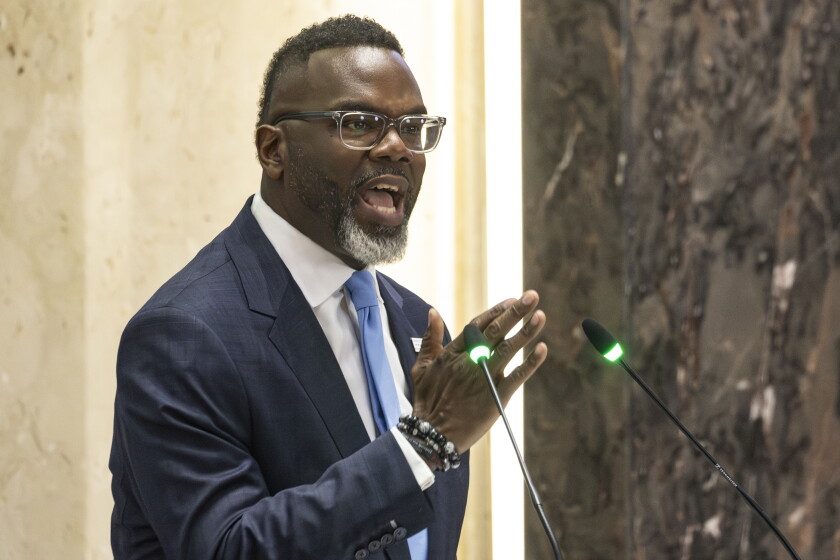
Johnson told council members his team is considering changes to the employee-tax credits and lease-tax proposal, and that he is open to other revenue ideas, without specifying what changes he would make. The council must pass a budget by the end of the year. Its next full meetings are scheduled for December 8 and 9, though a final vote may not be ready by then.
Chicago Alders Block Johnson’s Revenue Plan as Budget Fight Deepens
Chicago’s budget standoff now centers on whether Mayor Brandon Johnson will revise a plan that 28 council members say they will not support. The coalition’s opposition means Johnson needs to win over at least some of them to reach the 26 votes required for passage.
The alders reject a $25 monthly charge on companies with at least 125 employees and a proposed increase in the personal property lease tax from 15% to 20%. The mayor’s office estimates the measures would bring in $335 million a year. The coalition also opposes new spending and the use of $75 million in parking-meter proceeds for pension payments.
The members say the city should trim ongoing expenses before pursuing additional revenue and pursue money owed to it. They cited an Inspector General report estimating Chicago’s outstanding debts at more than $8.1 billion, while the comptroller estimated roughly $3 billion was collectible or incurred within the past seven years. That argument puts collection and budget discipline ahead of asking businesses and people who lease property to pay more.
Johnson’s team is considering changes to the tax credits tied to the employee charge and to the lease-tax plan, and he says he is open to other revenue proposals. He has not specified revisions or agreed to abandon the taxes. The city must pass a budget by year’s end, with full council meetings scheduled for December 8 and 9.
Chicago Council Majority Rejects Johnson’s Proposed Tax Hikes
A council majority is drawing a firm line against Mayor Brandon Johnson’s proposed tax increases, warning that his 2027 budget cannot pass in its current form. The 28 members’ opposition leaves Johnson needing concessions or a shift in support to secure the 26 votes required.
The disputed measures are a $25 monthly charge per employee at companies with at least 125 workers and a rise in the personal property lease tax from 15% to 20%. The mayor’s office expects them to generate about $335 million annually. The alders also object to new spending and to directing $75 million from the parking-meter deal toward pension payments.
The coalition says the lease-tax rate was set at 15% through 2028 in the 2026 budget and should not be raised one year later. Its members argue the city should reduce ongoing costs and collect existing debts before asking for additional revenue. They point to a finding that the city is owed more than $8.1 billion, though the comptroller estimated about $3 billion was collectible or incurred within seven years.
Johnson says his budget team is examining possible adjustments to the employee-tax credits and lease-tax proposal and is open to alternatives. He has not committed to scrapping either tax. The council faces a year-end deadline, with its next full meetings set for December 8 and 9.
Reported by FOX 32 Chicago, CBS Chicago, Chicago Sun-Times, Block Club Chicago.