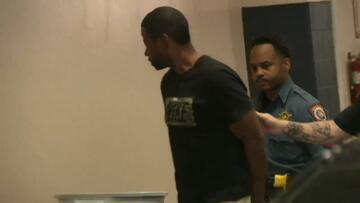
Farwell’s Deadlock Became a Guilty Verdict

A federal jury in Boston first signaled it might not reach a decision in Matthew Farwell’s trial. Then, after returning to deliberate, it found the former Stoughton police detective guilty of killing Sandra Birchmore and causing the death of her unborn child. The sequence matters: the jury’s Monday deadlock note was a snapshot of deliberations, not the final result. Farwell faces up to life in prison, with sentencing still to come. The jury’s initial impasse and the eventual guilty verdict mark the two turns in a case that began with a disputed finding about how Birchmore died.
Farwell, 41, pleaded not guilty to federal charges alleging that he killed Birchmore, 23, and caused the death of her fetus. Prosecutors said he killed her to stop her from reporting his alleged crimes to federal authorities. For prosecutors to win the witness-related count, jurors had to find not only that Farwell killed her, but that preventing such a report was his purpose. The second charge concerned the death of the unborn child. Birchmore was pregnant when she died, with September 2021 as her expected due date.
The jury of eight men and four women had spent roughly 10½ hours deliberating when, late Monday, it sent Judge Denise Casper two notes. One asked about scheduling; the next said jurors were deadlocked and did not expect the division to change soon. The notes gave no clue about which evidence or legal element had divided them. Casper dismissed the panel for the evening. On Tuesday, after meeting with both sides, she directed jurors to continue and urged them to take the time required. Deliberations could not run past 6 p.m., and jurors planned to return again if they did not reach a decision. The Tuesday proceedings followed a common feature of serious trials: a jury’s impasse does not itself end deliberations.
The prosecution’s account joined the alleged sexual abuse to the motive for the killing. Prosecutors said Farwell met Birchmore through the Stoughton Police Explorers program when she was a teenager and began a sexual relationship with her when she was 15. They alleged that the relationship continued for years, that Farwell had sex with her while on duty, and that Birchmore was preparing to expose him. They also argued that she held information relevant to alleged federal offenses, including wire fraud tied to those encounters. At trial, jurors heard from numerous witnesses, and an advocate for Birchmore said she presented them with more than 30,000 emails and text messages.
The defense offered a different explanation for the final hours. Farwell’s lawyers said he went to Birchmore’s Canton apartment to end the relationship and told her he was not the father of her baby. They argued she died by suicide after that conversation, pointing to a previous suicide attempt and mental-health history while challenging expert evidence that she had been strangled. Prosecutors, by contrast, said Farwell strangled her and staged the scene to resemble a suicide. Video shown to jurors placed him entering and leaving the apartment building on the night in question, but the jury had to assess that evidence alongside the medical testimony and the broader record. The related Massachusetts murder-trial coverage offers context for the procedural drama, not a substitute for the evidence jurors weighed here.
The case also carried a history of sharply different official conclusions. Investigators found Birchmore dead in her apartment on Feb. 4, 2021. A state investigation initially concluded that she died by suicide, and no charges followed. Her friends and relatives disputed that finding and urged investigators to examine Farwell. After another two-and-a-half years had passed, the FBI opened its own investigation. Federal prosecutors said investigators pursued evidence that earlier investigators had overlooked or discounted, and consulted a medical expert who concluded Birchmore had been strangled. The state medical examiner later changed the cause-of-death determination to undetermined. Federal prosecutors indicted Farwell in 2024.
The jury’s reported deadlock drew distress from Birchmore’s relatives and people advocating for her. Her cousin Barbara Wright described feeling stunned, while advocate Melissa Berry said the impasse was painful but expressed hope that the jury would reach a guilty verdict. Berry also called for consequences for other officers she believed had been involved in abuse or a cover-up. Those were the views of family and an advocate, not findings that Farwell’s verdict established. The case reports that the initial investigation did not bring charges; they do not establish that any other officer committed a crime. The separate Lindsay Clancy mistrial is a reminder that a hung jury can leave a case unresolved, but Farwell’s jury ultimately returned a verdict instead.
The two sides’ strongest arguments were not interchangeable. The defense disputed both the manner of death and the account of motive. The prosecution had to prove the specific federal purpose behind the killing, not merely establish a troubled relationship or a death. One legal analyst suggested jurors might have focused on whether Birchmore intended to communicate with federal authorities, rather than simply disclose the pregnancy or relationship. The jury’s note did not confirm that theory, and its final verdict does not tell the public which particular evidence resolved the question. What it does establish is that jurors found Farwell guilty on both federal counts after continuing their deliberations.
For my part, the change from a deadlock note to a verdict is a useful reminder not to treat a jury’s first public signal as its conclusion. The more difficult question for the public record is how the original investigation and the later federal inquiry reached such different assessments. Farwell’s conviction resolves the criminal charges against him at trial; sentencing remains ahead.
Update, November 10, 2026: The later reports add several details about the evidence and stakes. Farwell’s conviction carries a mandatory life sentence without parole. Jurors heard from about 50 witnesses and reviewed roughly 500 exhibits. A tipster reported the relationship to Farwell’s department 12 days before Birchmore’s death, and a later paternity test found that another man had fathered her child. A digital-forensics expert also testified that Birchmore’s phone stopped moving three minutes before a lobby camera recorded Farwell leaving her building.
Reported by The Boston Globe, CBS Boston, Boston.com, GBH News, New York Post, CBS News, ClickOnDetroit WDIV, Fox News, CNN.