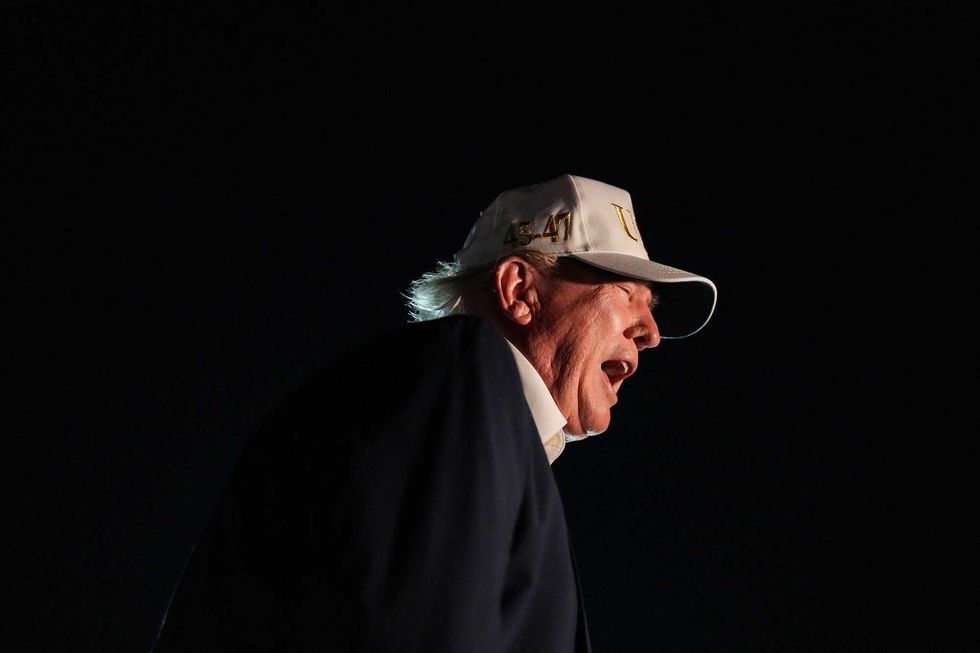
Trump Says He Cannot Forgive Political Enemies When Asked About Heaven
The conversation came as interviewer Ross Douthat asked Trump what he believed would happen after death. Trump first said he hoped people would miss him, then said he was religious and believed he could go to heaven “in theory.” Douthat asked whether he could forgive political enemies, invoking Erika Kirk’s forgiveness of the person charged with her husband’s killing at a memorial service for Charlie Kirk.
Trump answered that he probably could not forgive some of his enemies, adding that he hated them and always would. He specifically named James Comey and Nancy Pelosi during the exchange, and said of his opponents: “Look what they put ME through.”
The answer came as the president’s relationship with evangelical Christians faces new scrutiny following Republican losses in the midterms. Evangelical white voters and Christians identifying as born-again supported Trump at about 82% in each of the 2016, 2020 and 2024 elections. They accounted for 17% of voters in this midterm election, compared with 23% of voters in 2024.
Franklin Graham, an evangelical leader who has supported Trump, responded by emphasizing Christian teaching about heaven. He wrote that people must acknowledge their sins, repent and receive Jesus Christ by faith. Mark Tooley, who leads the Institute on Religion & Democracy, raised the question of whether evangelical political support will persist or change in a post-Trump era. How evangelicals might reshape their political identity while holding to their religious convictions remains to be seen.
Trump’s Refusal to Forgive Puts His Christian Supporters on the Spot
Donald Trump’s answer about forgiveness cut directly against the Christian values many of his supporters say should guide public life. Asked by Ross Douthat on “60 Minutes” whether he could forgive political opponents, Trump said he probably could not, because he hated some of them and always would.
Douthat raised the example of Erika Kirk forgiving the person charged with her husband’s killing. Trump instead focused on what his enemies had put him through, naming James Comey and Nancy Pelosi. Asked first what he thought would happen after death, he said he hoped he would be missed before saying he was religious and could go to heaven “in theory.”
The exchange matters for evangelical Christians who have been among Trump’s most reliable political constituencies. Evangelical white voters and Christians identifying as born-again backed him at about 82% in 2016, 2020 and 2024. They were 17% of voters in this midterm election, down from 23% in 2024, as Republicans suffered losses.
Franklin Graham, an evangelical leader who supports Trump, responded with a reminder that Christian teaching calls for repentance and faith. Mark Tooley of the Institute on Religion & Democracy questioned whether a movement that prioritized a forceful political personality over personal faith and morals can endure beyond Trump. The challenge for evangelicals is not simply choosing another political standard-bearer, but reckoning with the values their movement has elevated.
One Interview Answer Won’t Decide Evangelicals’ Future With Trump
A question about heaven produced a stark answer from Donald Trump, but it does not settle the future of his relationship with evangelical voters. In a “60 Minutes” interview, Ross Douthat asked whether Trump could forgive political opponents, pointing to Erika Kirk’s forgiveness of the person charged with her husband’s killing. Trump said he probably could not forgive some enemies and that he hated them.
The answer was personal, not a policy announcement. Trump also said he was religious and believed he could go to heaven “in theory.” Franklin Graham, a Christian cleric aligned with the president, responded by stressing the Bible’s call to acknowledge sin, repent and receive Jesus Christ by faith, without directly criticizing Trump.
Support from white evangelicals and self-described born-again Christians remained steady: they backed Trump at around 82% in 2016, 2020 and 2024. In this midterm election, they represented 17% of voters, versus 23% in 2024. Republicans’ losses have led to questions about what comes next, but the interview alone does not establish that those voters are abandoning Trump.
Mark Tooley of the Institute on Religion & Democracy asked whether evangelical political engagement will continue to revolve around a strong leader or take a different form after Trump. The open question is how evangelicals will balance their religious convictions with political priorities in the years ahead.
Reported by Raw Story, Deseret News.