Eagles’ Losing Streak Has Made Every Gesture a Story

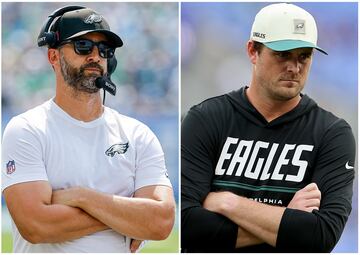
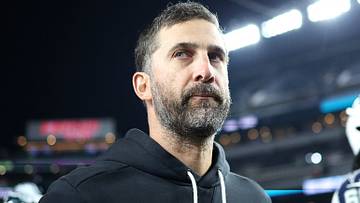
The Philadelphia Eagles are 2-7, have lost seven straight, and are spending part of their bye-week conversation on a hand gesture. After Sunday’s 19-11 loss to the New York Giants, a video appeared to show coach Nick Sirianni raising his middle finger toward booing fans as he walked toward the tunnel. On Monday, he denied doing it: “Absolutely not.” He said the allegation surprised him. The footage is open to interpretation; Sirianni’s denial is not. For a team in this kind of slide, the important fact is less what one hand did than why the entire building is under a microscope.
The defeat was the Giants’ first in Philadelphia since 2013, and it left the Eagles at their worst start through nine games since 1999. The streak is their longest since an eight-game run of losses in 2012. That context makes the video combustible, but it doesn’t turn an ambiguous clip into proof. The question is now tangled up with a larger record: the offense has scored 16.4 points per game, gained 260 yards per game and allowed 3.5 sacks per game, according to the report on Sirianni’s Monday comments. A finger can become a headline in one afternoon. Fixing those numbers takes more than a press conference.
There is history behind the fan-coach tension. In 2024, after a narrow win over Cleveland, Sirianni cupped his ears and shouted toward some Eagles fans who had booed him. He first described the moment as excitement, then apologized, saying his energy should have been directed toward coaching and celebrating with the team. That episode offers a useful distinction: this is not the first time his animated sideline manner has landed badly with supporters. But the older incident does not establish what happened in Sunday’s video, and it is not evidence that he meant to insult anyone this time. The current allegation remains disputed, and Sirianni has rejected it.
The football problem is less ambiguous. Philadelphia entered the season with expectations for a new offense under coordinator Sean Mannion, whose system was expected to resemble schemes associated with Kyle Shanahan and Sean McVay. The results have not followed the plan. Jalen Hurts has been unavailable, and Joe Milton started against the Giants after Tanner McKee had begun earlier games, according to one account. Milton threw for 169 yards and ran for 64 in Sunday’s loss; another report adds that he was sacked seven times and lost a fumble. Quarterback availability and a changing lineup matter when evaluating the offense, but they do not erase the team’s broader failure to move the ball or protect its passer. Small samples can mislead; a nine-game record and a seven-game skid are no longer a one-week blip.
The organization’s next moves are also not entirely clear across the reports. Sirianni said he had made no staff changes after the Giants game and described the immediate work as reviewing the performance and conducting self-scouting. He did not give a straight answer about whether Philadelphia would sell before Tuesday’s 4 p.m. ET trade deadline, saying his focus was finding a way out of the slump. Yet a separate account says Philadelphia sent defensive tackle Jordan Davis to Jacksonville on Monday, receiving a 2027 first-round selection and a 2029 second-round selection in return. Another report characterizes the move more broadly as a first- and second-round return. That reported trade suggests a major decision about the future, while the coaching comments leave the team’s wider deadline strategy unanswered. The available accounts do not reconcile those details.
There is precedent for the questions gathering around Sirianni. Philadelphia finished last season 11-7 after beginning 8-2, then lost in the wild-card round. His overall record and two Super Bowl appearances are part of the longer evaluation, not a free pass for the present. The immediate stakes have shifted: playoff odds were reported below one percent, and the team’s Week 11 game against Pittsburgh was moved from a national late-afternoon slot to a 1 p.m. broadcast. That is a scheduling decision, not a verdict on the coach, but it is another sign of how far the season has fallen from expectation. Coaching questions are now central to the Eagles’ story, while the question of ownership’s support was already circulating earlier in the losing run.
A bye week gives the Eagles time to review, but it does not supply a new quarterback, restore injured players or make the offense’s production less troubling. The team says it is studying itself; the trade report points toward at least one move aimed at the future. Whether more changes follow remains unclear. The Eagles must eventually show that their process can produce better drives and more points, not only explain why those results have been poor. And if they want the outside conversation to return to football, the most reliable way is to make the football less alarming. The coordinator has also addressed communication problems, another part of the work that cannot be settled by one denial.
For my part, I don’t think a blurry hand position deserves more certainty than the video can support. I do think seven losses in a row are a very clear signal. The bye week is a chance to separate the noise from the work, but the next evidence will be on the field.
Reported by The Philadelphia Inquirer, CBS Sports, New York Post, Newsweek, Fox News.