Hegseth Faces Impeachment as Iran War Drives the Debate

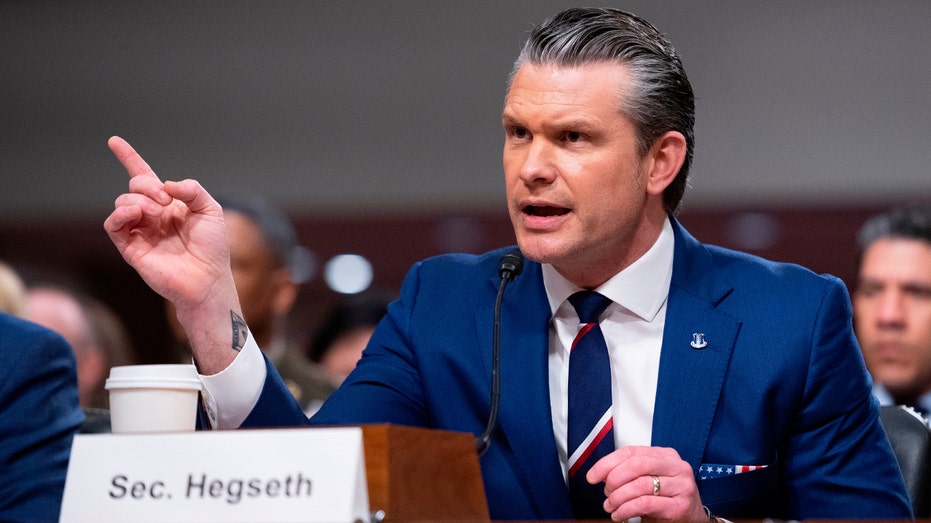
Defense Secretary Pete Hegseth is preparing to defend his record at a Pentagon news conference as the Hegseth impeachment effort puts the Iran war, presidential authority and the conduct of his office before Congress. The briefing, scheduled for Tuesday morning, will be his first in more than 180 days, according to reports. It follows the introduction of updated impeachment articles by Republican Representative Thomas Massie and comes after Republicans suffered sweeping losses in the midterm elections. Hegseth has served as defense secretary since 2025. The biographical record and the account of his tenure place him in the post during the period now under scrutiny.
Massie, a Kentucky Republican whose congressional term ends in January after he lost a primary to a candidate backed by President Donald Trump, has pressed the impeachment effort despite resistance from House Republican leadership. The articles accuse Hegseth of launching military action against Iran without congressional approval, disregarding laws intended to limit civilian casualties, and retaliating against Democratic Senator Mark Kelly, among other claims. House rules allow two legislative days for the chamber to arrange a vote. Massie has invited Hegseth to address all eight articles publicly and explain why he believes he is not guilty.
The allegations are not settled findings. They are charges in an impeachment resolution, and Hegseth has rejected the effort as politically motivated. On Monday he said critics who challenge operations in Iran and Venezuela are also challenging what the troops accomplished. He named the operations Epic Fury and Rough Rider and referred to the capture of Nicolás Maduro, describing the military’s achievements as historic. In a social media video the prior week, he called the articles sham proceedings and portrayed Massie as a defeated lawmaker aligned with Democrats. Hegseth has continued to push back against the impeachment campaign, but the dispute now has a formal path through the House.
The politics of the war are part of the case, though they are not identical to its legal questions. Reports say members of both parties have connected the Republicans’ midterm losses to the Iran conflict and rising energy prices. Vice President JD Vance blamed the war for the party’s poor result, while Hegseth answered that Trump had said he would make the same decision again and that he agreed. Hegseth also echoed Secretary of State Marco Rubio’s argument that an action need not be popular to be necessary. He said the war was required to confront Iran’s pursuit of a nuclear weapon, and claimed Iran had been devastated. At the same time, Iran has continued striking US-used military bases in the region, causing billions of dollars in damage, and commercial vessels in the disputed Strait of Hormuz.
There is a further uncertainty about what comes next militarily. Trump has said he intends to maintain the status quo and does not believe escalation is necessary; in another account, he described the war as effectively over and said Israel and Gulf allies were protected. Hegseth’s defense of the operation therefore comes alongside the president’s effort to play down the prospect of a wider campaign. The administration’s position and the battlefield picture are not fully reconciled in the reports. Nor do they resolve Massie’s central charge about congressional authorization. That question turns on the asserted facts and the relevant law, not simply on whether the operation was popular or whether military personnel performed bravely.
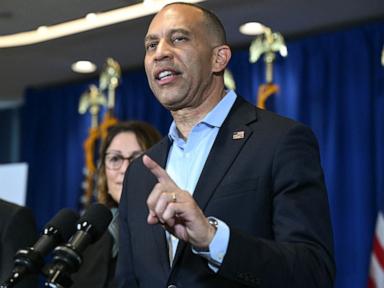
House Democratic leader Hakeem Jeffries has said he strongly supports impeachment, accusing Hegseth of abusing his authority and calling the Iran conflict a costly failure. House Speaker Mike Johnson has argued that impeaching a cabinet secretary during hostilities abroad would look especially bad. Trump says he will stand by Hegseth if the House impeaches him, and attacked Massie personally while defending his defense secretary. Massie says no other Republican has committed to backing the articles. Other Republicans have not ruled out considering them: Representative Don Bacon said he was still weighing whether Hegseth’s performance warranted impeachment or some lesser form of discipline. The House vote remains a live question, and the reporting does not establish how many Republicans will join the Democrats.
For impeachment to pass before the House changes hands to Democrats in January, the reports say at least three Republicans would need to support it if all Democrats vote yes, with the exact requirement affected by absences. Removal would be a separate and harder step: conviction in the Senate would require support from upwards of twelve Republicans. The distinction matters. A House impeachment vote would not itself remove Hegseth, while a Senate conviction would. Tuesday’s briefing may sharpen the public argument, but it cannot settle the vote count or the constitutional dispute by itself.
There is also a sharp factual dispute over a school bombing in Iran. Massie has accused the administration of failing to acknowledge responsibility, arguing that the evidence should make clear who carried out the strike. The reports do not establish who bombed the school, and that uncertainty should not be converted into a conclusion. Massie has also alleged that US troops were used to seize oil for large American corporations. Those are serious claims, but the material provided does not independently verify them. For my part, I would want to hear the evidence laid out plainly, including what remains unknown. In a matter this grave, a confident podium performance is no substitute for a careful accounting.
The immediate sequence is clear: Hegseth’s briefing is set for Tuesday morning, the House must decide whether to schedule a vote, and lawmakers will have to weigh allegations against political pressure and the practical demands of an ongoing conflict. The reports offer no final resolution on the war’s status, the school strike, or the impeachment tally. They do show a cabinet secretary defending decisions made with the president, a Republican lawmaker demanding accountability, and a party divided over whether the Iran war was necessary, costly, or both. Other questions about Hegseth’s position and Pentagon oversight may continue to accompany the impeachment debate.
Update, November 10, 2026: At Tuesday’s briefing, Hegseth argued that policy disputes and alleged misconduct did not meet the constitutional threshold for impeachment, and said Massie’s effort endangered US service members by undermining missions. Massie’s resolution runs 34 pages, and he has also criticized restrictions on press access at the Pentagon. He is seeking a House vote this week, with one report suggesting Wednesday. The military has continued intermittent operations against Iran and carried out deadly strikes on boats in Latin America that it says were involved in drug smuggling.
Update, November 10, 2026: At the briefing, Hegseth said he was not concerned about impeachment and compared it with the two failed attempts to remove Trump, arguing that neither had weakened the president politically. He cited American death tolls in Vietnam and Korea while defending the Iran campaign. Reports also describe wider changes at the Pentagon under Hegseth, including new fitness and grooming rules, testosterone screening for male personnel and changes to chaplaincy. His office reportedly used online-search criteria to block some senior promotions, disproportionately affecting women and people of color. Retired Navy admiral Nancy Lacore, whom Hegseth dismissed, warned that rebuilding the affected leadership pipeline could take decades.
Update, November 10, 2026: At the briefing, Hegseth argued that the proper response to policy disputes was legislation or elections, not impeachment, and warned that the effort could put service members who carried out orders in the dock next. He claimed the Iran campaign lasted fewer than 40 days, hit more than 13,000 targets and left over four-fifths of Iran’s nuclear industry destroyed, while asserting that US forces controlled the Strait of Hormuz. The House was expected to take up the measure Tuesday evening, possibly after a preliminary vote to set it aside. Trump praised Hegseth after the briefing.
Reported by The Philadelphia Inquirer, PBS NewsHour, CBS News, The Guardian, The Washington Examiner, Fox News, Daily Mail US, BBC, NBC News, The Daily Beast, ABC7 New York, CBS Chicago, Townhall, The New Republic, CNN, FOX 10 Phoenix, Twitchy, The Blaze, Breitbart, Newsweek, Deseret News, MSNBC, Reason.