Biden’s memoir puts Jan. 6 and presidential accountability back in focus

Joe Biden’s forthcoming memoir, Promise Me, America, arrives with a sharp verdict on Donald Trump and a revealing account of their private meeting before Trump returned to the White House. In the first published excerpt, Biden says Trump’s conduct around the January 6, 2021, attack should remain attached to his name. The book is scheduled for release on November 17, and Biden says his cancer treatment will limit how much he can do to promote it. His account brings together a former president’s attempt to defend his record, condemn his successor and explain what he believes is at stake in the transfer of power. The first memoir excerpt lays out the broad argument.
Biden writes that Trump “led an insurrection,” arguing that his goal was to remain in office after losing the 2020 election. The election was won by Biden and Kamala Harris, according to the basic historical record. The 2020 result is the backdrop to Biden’s accusation: Congress was meeting to certify that result when Trump supporters attacked the Capitol. Biden disputes any attempt to portray the crowd as peaceful protesters, emphasizing the violence against police officers and the effort to interrupt certification. He also condemns Trump’s pardons and clemency for people charged in connection with the attack, saying the offenders who assaulted officers should have served prison sentences.
That argument is about more than a former president’s anger at a successor. Biden frames January 6 as a test of whether an election result and the institutions that certify it can be treated as binding. He says Trump’s continuing claims about the 2020 election, and his pardons of defendants, make the event impossible to consign to the past. The dispute is also about how political leaders speak about law enforcement: Biden argues that praising police while excusing attacks on them is a contradiction. His charge is direct, while the memoir’s larger claim is that public accountability should not depend on which party holds power.
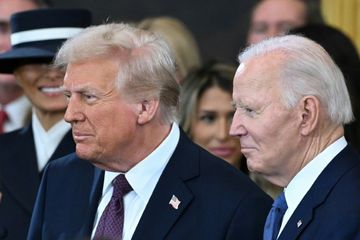
The excerpt also describes a surprisingly warm Oval Office conversation. Biden recalls Trump telling him that without politics they might have been friends, praising his record on job creation and saying he was relieved not to have faced him in the election. Biden says he was taken aback, then moved the conversation along to issues he thought would shape the next administration. He recalls discussing Ukraine and Russia, NATO, Israel and Gaza, and China. In Biden’s telling, Trump paid more attention to the personalities of foreign leaders than to the substance of the problems. The accounts place this meeting after the 2024 election; one report’s opening description instead says it happened after the 2020 vote, an apparent inconsistency in the reporting. Biden’s account of the encounter gives the fuller description of its tone and subject matter.
Biden connects that meeting to a wider concern: that Trump would dismantle policies and institutions rather than preserve useful work from the administration before him. He criticizes Trump’s reversal of climate measures, including the renewed withdrawal from the Paris accords and moves affecting public-land drilling, electric vehicles and renewable-energy projects. He also faults the Department of Government Efficiency, cuts to federal funding and support for nonprofits, and withdrawal from the World Health Organization. These are Biden’s arguments about the direction and consequences of Trump’s decisions, not a neutral inventory of the administration’s record. The memoir excerpt also attacks Trump’s approach to immigration and birthright citizenship, and raises Biden’s alarm about a Supreme Court decision granting presidents some immunity for official acts.
The timing gives the memoir another layer. Biden’s presidency ran from 2021 to 2025, after a long career in public office. His political record includes eight years as vice president and decades in the Senate. But the book comes after his 2024 campaign ended: he withdrew following a damaging debate, and Kamala Harris then lost to Trump. Biden’s account asks readers to judge his presidency not only by what his administration accomplished, but by what Trump has undone. That is a difficult case to make to voters who had already expressed concerns about Biden’s age and the economy. The memoir can set out his explanation, but it cannot settle how the public weighs the record.
Biden also writes about his own health. He has said that doctors remain encouraged by his response to prostate cancer treatment, while acknowledging that some days are harder and that the illness slows him down. He has asked readers to let the book speak for him because he cannot take part in as many public conversations as he had hoped. The limitation is practical as well as personal: a memoir launch usually gives an author a chance to answer questions, and Biden says he will have fewer chances to do that. The health news and the book’s promotion are therefore part of the same story.
For my part, I find the Oval Office recollection striking because the warmth Biden describes sits beside his severe judgment of Trump’s conduct. A cordial conversation can be real without resolving the larger dispute over January 6. The memoir’s account will now meet the test every presidential memoir faces: whether readers see a record honestly explained, or a legacy defended. The full book arrives November 17.
Reported by The Philadelphia Inquirer, NBC News, PBS NewsHour, BBC.