Oregon’s comeback reshapes the playoff picture for both teams

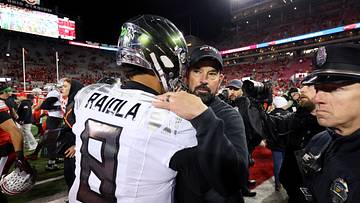
Oregon’s 41-28 win in Columbus was not merely a comeback; it was a sharp change in direction for two teams whose playoff prospects now look very different. The Ducks, ranked No. 23 in the College Football Playoff standings, fell behind 14-0, then scored 38 unanswered points. Ohio State, which opened the season ranked No. 1 in the preseason AP poll, has now lost twice in a row. The full game story is in the account of Oregon’s rally.
The first quarter offered Ohio State the script it wanted. Bo Jackson ran for two touchdowns, and the Buckeyes looked in control. Oregon’s response began with a 33-yard field goal, but the more consequential play came on fourth down: linebacker Teitum Tuioti took a direct snap on a fake punt and found Matayo Uiagalelei for a 30-yard gain. Oregon scored after the conversion, then Devin Jackson intercepted Luke Fahey, setting up a last-play touchdown that put the Ducks ahead at halftime. The call was daring, but the payoff was measurable: Oregon turned a deficit into a lead before the break.
That sequence also puts the familiar “momentum” story on firmer ground. The fake punt mattered because it extended a drive; the interception mattered because it ended Ohio State’s possession; and the touchdown mattered because it changed the score. Oregon’s defense then kept disrupting the Buckeyes, who were stopped on four consecutive fourth-quarter possessions, according to one report. The Ducks’ offense took advantage, pushing the lead to 38-14 before Ohio State scored twice late. Oregon’s risky calls were not magic. They created additional chances, and the defense made those chances count.
Dierre Hill Jr. gave the comeback its most direct running-game evidence. He finished with 75 yards on 13 carries and two touchdowns, including a 48-yard score early in the third quarter that stretched Oregon’s lead to 24-14. Quarterback Dylan Raiola completed 25 of 40 passes for 257 yards and two second-half touchdowns. Dakorien Moore caught seven passes for 56 yards, including an 11-yard, one-handed touchdown. Those numbers describe complementary contributions: Hill punished the defense on the ground, while Raiola and Moore supplied the passing scores. Oregon had been adapting after Dante Moore’s season-ending concussion; it has now won two straight after dropping two of its previous three.
Ohio State’s offense is the harder part to project from one afternoon. Fahey, making his second career start after Julian Sayin’s injury, completed 36 of 50 passes for 360 yards, one touchdown and one interception. That passing total did not prevent the collapse: Ohio State’s offense stalled after the opening quarter, and the interception just before halftime helped Oregon take control. Jeremiah Smith finished with seven catches for 133 yards and a touchdown, but the game account says he had only four receptions through three quarters before adding a 57-yard catch late. A large final line can coexist with an offense struggling when the game was decided.
There is some disagreement in the reports over the game’s labels and details. One describes Ohio State as No. 12, another as No. 11; both identify it as a loss to No. 23 Oregon. Accounts also differ on whether the fake punt came on fourth-and-9 or fourth-and-10. Those discrepancies do not alter the central sequence, but they are reminders to separate the stable result from the less consistent framing. The season is being played under the third edition of the 12-team playoff system, so a loss does not mechanically end a team’s chances; it does make the path more demanding. The playoff format supplies that context.
For Ohio State, the immediate issue is recovery and remaining schedule. The Buckeyes host Northwestern next, then travel to Nebraska and finish at home against Michigan. They have lost back-to-back games for the first time since 2011, and the reports say their playoff hopes now require substantial help. For Oregon, the route remains open but unfinished: Michigan visits next, followed by Michigan State and Washington. The Ducks’ 6-3 overall record and 4-2 conference mark keep the championship and playoff possibilities alive, but the win does not erase earlier losses. It changes what the next three games can mean. The season’s postseason begins in December under the current playoff calendar.
The win also carried a personal edge: Ohio State had beaten Oregon 41-21 in the Rose Bowl on the way to a national title, making this result a measure of payback as well as a standings jolt. After a fourth-quarter scuffle, Oregon coach Dan Lanning pointed toward the scoreboard, according to a report describing the exchange. For my part, the fake punt is the game’s cleanest lesson: boldness is most persuasive when the next play converts it into points. Oregon did that, then kept doing the less glamorous work of defending its lead.
The next useful evidence will come quickly. Oregon has to show this offense can sustain its output across the closing stretch, while Ohio State must demonstrate that its problems were not simply amplified by playing without Sayin. One comeback does not establish a new baseline, and one bad stretch does not settle the season. But the scoreboard did establish the immediate stakes: Oregon has a live route forward, and Ohio State has much less room for another misstep. The Ducks’ remaining playoff path is now worth tracking week by week.
Reported by Sports Illustrated, The Philadelphia Inquirer, Fox News, Newsweek.