A Podcast Joke Became a Test of Political Judgment

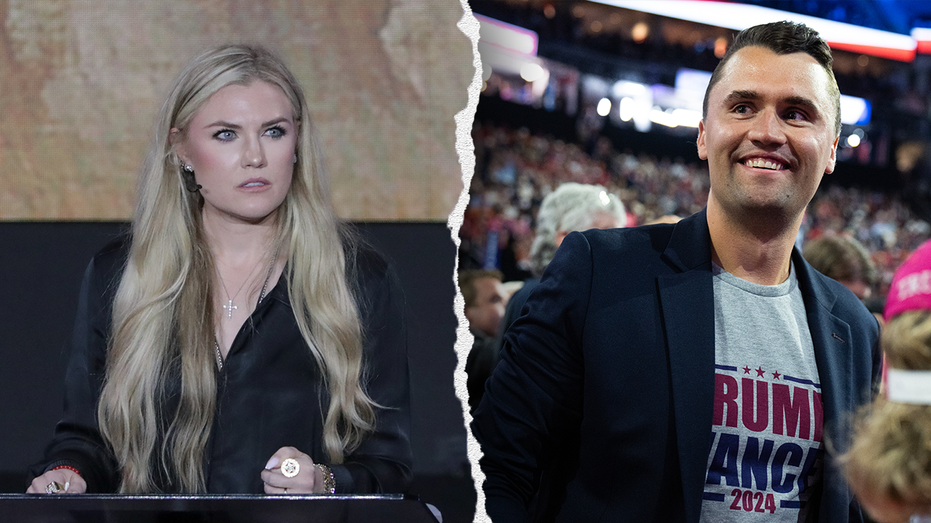
The Charlie Kirk podcast apology came after a joke about exhuming Charlie Kirk’s body became a public crisis for Jennifer Welch and Angie Sullivan, hosts of the I’ve Had It podcast. On Thursday, November 5, they read social media posts reacting to Democratic gains in the 2026 midterms. One post imagined digging up Kirk and killing him again. The hosts laughed. By Saturday, November 7, they had apologized and said they donated to Everytown for Gun Safety. In between, the clip spread online, sponsors began distancing themselves, and the episode’s political celebration was eclipsed by the hosts’ response to a joke about a murdered man. The account of the apology and its aftermath places the episode in the first days after the midterm results.
The episode was titled “Drinking MAGA Tears.” Welch and Sullivan read posts mocking Republican positions on abortion, vaccines and LGBTQ+ policies. One post made a crude joke about abortion; another mocked pronouns. The hosts praised the writers as patriots, then laughed at the line about Kirk. In a widely circulated clip, they bowed their heads and laughed for an extended stretch. A producer said he was zooming in for Fox; Welch then said, “No comment,” before the discussion moved to Kirk’s accused killer. The show has since had that segment removed, although the clip continued to circulate. The podcast’s political identity is not new: it has become known for liberal commentary and criticism of Donald Trump, while also criticizing Democratic Party leadership. That history) gives context to the episode, but does not make the joke any less consequential.
The hosts also asserted that Tyler Robinson, the man charged with Kirk’s killing, was a “MAGA person” from a “white MAGA family.” The reports provide no evidence supporting that characterization. They say Robinson was registered without a party affiliation; one report adds that voter records showed he did not vote in the previous two general elections. His mother told police, according to another account, that his views had shifted toward greater support for gay and transgender rights in the period before the shooting. Robinson and his family lived in Washington County, Utah, where 75 percent of residents voted for Donald Trump in 2024. That county-level result does not establish Robinson’s own politics.
He has been charged with aggravated murder, and prosecutors have said they will seek the death penalty. Kirk was killed on September 10, 2025, during a speech at Utah Valley University in Orem. The episode’s claims and the reported voter information leave a plain distinction: a place’s voting pattern is not proof of an individual’s beliefs.
On Saturday, the hosts posted a joint apology on Instagram. They called their laughter insensitive, said they regretted it, and apologized. They added that political differences did not make gun violence funny, noted their support for gun-safety reform, and announced a donation to Everytown. They said they would continue using their platform to promote safety. The apology addressed their laughter, not the separate assertion about Robinson’s politics. Neither host had immediately responded to one outlet’s request for comment. The statement and the episode’s removal mark a retreat from the moment, though they do not erase what viewers heard.
The commercial response was already taking shape. Cash App said on Thursday, in response to a post about the clip, that it no longer sponsored the podcast and did not condone violence. Boll & Branch likewise said it would not advertise with the show, now or in the future. Reports also name Chewy and Lola Blankets among companies that moved to distance themselves. The timing described in the accounts is not identical: the apology came Saturday, while the first advertiser statements followed the viral clip earlier in the week. A conservative activist claimed that the segment had been edited out; the reports independently say the Thursday segment was cut, while also noting that it was reshared online. The advertiser fallout shows how quickly a podcast’s commercial relationships can become part of a political controversy.
Criticism crossed the usual partisan lines. Conservative voices condemned the laughter as evidence of hostility and moral hypocrisy. A Democratic strategist, meanwhile, argued that the hosts were not helping their party: after Democratic victories, he said, the controversy redirected attention from those results and cast the hosts as representatives of Democrats when they were not. The reports do not establish that Welch and Sullivan speak for the party, nor do they show whether the episode changed anyone’s vote. Their own show has been characterized by outspoken liberal politics and criticism of Democratic leaders, a combination that makes the strategist’s complaint more specific than a simple partisan rebuke. The backlash concerned both the cruelty of the joke and the political cost of making it a public performance.
There is a further reason the wording struck hard. Kirk was not an abstract political figure in these accounts; he was killed by gunfire at a public event, and Robinson now faces a capital prosecution. The hosts themselves invoked the seriousness of gun violence in their apology and linked that concern to a donation. A separate reference supplied with these reports describes cases where premature obituaries became stories in their own right. That history is not the same as a joke about a dead person, but it underlines how language about death can escape its original setting and acquire a life of its own. The background on premature death reports is a reminder that words about mortality are not weightless just because they appear online.
For my part, I found the apology more useful for naming the wrong than for explaining how the hosts got there. The donation is a concrete gesture, but the missing explanation leaves the audience to judge the clip itself. What comes next is visible in the reports only in outline: the hosts say they will keep using their platform, sponsors have withdrawn, and the viral segment remains available outside the edited episode. The episode began as a victory lap after midterm gains. It ended as a test of whether a political show can distinguish mockery of opponents from amusement at a killing.
Update, November 9, 2026: The dispute has since acquired a price tag, though only as an outside estimate. Former Levi’s executive Jennifer Sey calculated that lost sponsorships could amount to about $7.6 million, assuming each company paid at least $100,000 per quarter. Welch rejected the figure, saying it was far off and that the show still had plenty of advertisers. She also said the podcast had welcomed nearly 30,000 new followers. In a later episode, “Not Today, TPUSA,” the hosts accused Turning Point USA of driving the backlash; the group’s spokesperson denied responsibility.
Reported by Fox News, Breitbart, The Hollywood Reporter, Variety, Daily Mail US, Newsweek.